
In 2026, we are officially in an era where the creation of content has become accessible and cheaper for everyone, from brands to individuals. Now more than ever, there’s a pressure for brands to release content in a faster, shadier way, or a slower, honest way. AI technology makes it more important for brands to prioritize trust through transparency and honest content. Back in March 2025, a viral trend where Studio Ghibli-style images became mainstream profile pictures for thousands of people shed a spotlight on this shift and raised a very important question: just because content is legal and shareable, is it ethical? Immanuel Kant, a philosopher from the 18th century, created a two-question test framework to define what is and isn’t ethical that still stands the test of time today. The two questions to answer are:
- Can I rationally will that everyone act as I propose to act?
- Does my action respect human beings’ goals rather than merely using them for my own purposes?
If the answer to either of them is no, the content isn’t ethical. Because the only path is forward, trust is now the ultimate differentiator, and the test for ethical content goes beyond just compliance. Respect for the audience and the creators behind the work is table stakes. You can figure out how to best navigate this new content marketing world by following a set of three principles: transparency, accuracy and engagement, and IP and attribution.
Tell People Who’s Talking
Within the last decade, researchers have studied native advertising and deception. “A paper titled Native Advertising Is the New Journalism: How Deception Affects Social Responsibility gathered data points from a diverse pool of professionals working in content marketing, SEO, journalism, and related adjacent fields. One of the major conclusions drawn was that the reader must never be confused about the source.” (AMA). Two of the best tips to follow when it comes to maintaining transparency are clear labeling and putting the brand in the byline. It’s not difficult to follow either of these tips. However, we see popular media outlets like Forbes using a “BrandVoice” label subtly in the corner of the page to denote their content marketing arm, resulting in confusion. Another common issue is the absence of brand mentions in bylines, making it confusing for consumers to know whether the brand aligns with the content they’re publishing.
The Federal Trade Commission and the European Union have established rule sets and transparency guidelines related to AI-generated media that’s used in commercial communications.
“According to the guide, the FTC’s disclosure trigger is not how much human editing follows AI generation, but how the content functions in front of an audience. If a reasonable consumer would interpret AI-generated material as a genuine human review, testimonial, or endorsement, disclosure is required.” (USA Today)

Image Source: USA Today
The top-of-mind risks associated with AI-generated media include brand and reputation risks, generic creative that diminishes customer trust, creating a fragmented brand voice, and undisclosed AI leading to a brand appearing dishonest.
Don’t believe these are risks? Coca-Cola, one of the biggest global brands created a commercial in 2024 entirely with AI. The immediate reaction? Backlash.
“Creators with large followings such as Alex Hirsch, the creator of the Disney series Gravity Falls, commented on an X post that showed the new commercial, which has amassed over 56 million views, FUN FACT: @CocaCola is ‘red’ because it’s made from the blood of out-of-work artists! #HolidayFactz. Consumers recognize Christmas as an integral part of the company’s brand, and AI technology acts as a disruption.” (NBC News).
The backlash to this commercial leads to our next principle: accuracy and engagement.
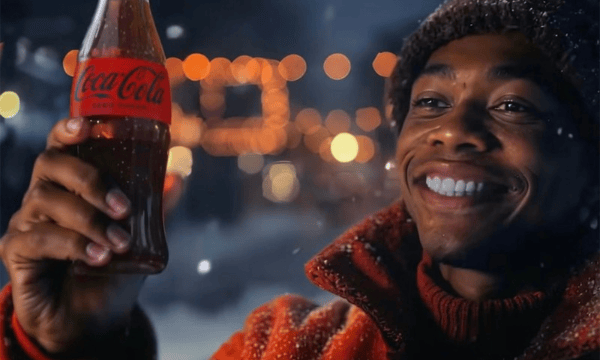
Image Source: NBC News
The Pitfalls of Speed and Sensationalism
The instant economy and ubiquitous access a majority of people have to the internet and social media via smartphones has created a vacuum of pressure for all brands and storytellers. As a result of this, a common issue we see often is news organizations grappling with the difficulty of reporting on a breaking story quickly before verifying if the facts are true.
Why’s this happening? The answer is simple: speed and sensationalism commands views and money.
One of the best examples of a scenario when pressure to be first outweighed the responsibility of being accurate was the Boston Marathon bombing coverage in 2013. Shortly after the bombing, social media users and some news outlets rushed to identify suspects before law enforcement even completed their investigation. Specifically, social media users wrongfully named Sunil Tripathi, a 22-year-old Brown University student who had been missing since mid-March, as a suspect (BBC News).
Ensuring accuracy and truthfulness in communications, instead of sensationalizing like this and having bias, eliminates confusion, distrust, and pain among all parties involved. Accuracy is about being honest about events. The same respect applies to whose work you use, which brings us to attribution and ownership.
Attribution and Ownership in the Age of Artificial Intelligence
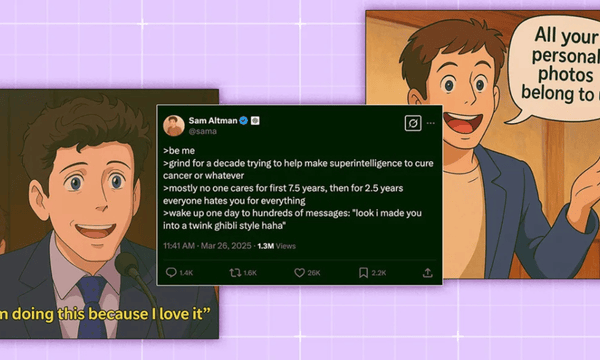
Image Source: Futurism
In 2025, OpenAI, an artificial intelligence research company, launched Sora 2, an AI video and audio generation model. After millions of people constantly started using the app to generate depictions of Japanese anime and video game characters, matters got out of hand.
“A group representing some of the biggest anime and animation companies like Studio Ghibli, Bandai Namco, Square Enix, etc. submitted a request to OpenAI demanding it stop using their copyrighted content to train the video-generating AI tool.” (Futurism).
The issues expanded beyond Sora 2. OpenAI launched an image generation update for their popular chatbot, ChatGPT, which led to a super viral trend of users creating profile pictures in the style of the renowned animation studio Studio Ghibli. Sam Altman, co-founder and CEO of OpenAI, even jumped on the trend and created a Ghibli-style portrait of himself.
This becomes a legal gray area because there’s a distinct difference between style and work. OpenAI stood firm on the matter, staking the claim that there is no copyright infringement. The image generation is just using the style of living artists and refers to the overall style of a studio, not an individual.
When you peel back the layers of this onion even further by applying the Kant test, it arguably fails the second Kant question since it’s disrespecting the humans who created this artwork and users are leveraging the art for their own purposes. OpenAI enabling millions to create these portraits further supports the point just because a trend can be viral and use an artist’s life work without their consent, doesn’t mean it’s right. Even if Studio Ghibli never pursued a lawsuit.
The brands and organizations that win the hearts, minds, and wallets of consumers aren’t the ones who rode the trend the fastest by “Ghibli-fying” their profile picture. It will be the brands people still trust afterward, the brands that learn what their customers value, contribute to social causes, and prove that their mission has a positive impact on communities. In the world of AI content creation and the pressure of the need for speed, there are two options. Short-term gains or sustainable longevity. The choice is yours.
Works Cited
American Marketing Association. (2024, January 22). 6 Ways to make your native Advertising More Ethical. https://www.ama.org/marketing-news/6-ways-to-make-your-native-advertising-more-ethical/
Coca-Cola slammed for using artificial intelligence in holiday ad. (2024, November 18). [Video]. NBC News. https://www.nbcnews.com/tech/innovation/coca-cola-causes-controversy-ai-made-ad-rcna180665
Landymore, F. (2025, November 3). Studio Ghibli demands that OpenAI stop ripping off its work. Futurism. https://futurism.com/artificial-intelligence/studio-ghibli-openai-stop-ripping-work
Lee, D. (2013, April 19). Boston bombing: How internet detectives got it very wrong. BBC News. https://www.bbc.com/news/technology-22214511
NewsNetwork. (2026, May 28). AI-Generated UGC Regulations & FTC Disclosure Compliance: Guide Released. USA Today. Retrieved November 21, 2026, from https://www.usatoday.com/press-release/story/33548/ai-generated-ugc-regulations-ftc-disclosure-compliance-guide-released/
The importance of ethics in content strategy. (n.d.). Content Strategy Knowledge Base. https://www.contentstrategy.at/lecture-reports/the-importance-of-ethics-in-content-strategy


Leave a Reply