Tag: health

  • From Flip Phones to Fiction: Why Storytelling is the Most Powerful Tool We Have

    Image Source: Generated by CoPilot


    What if your Oura ring could predict your emotions before you even felt them? Or, what if you had a tattoo that was your biometric access to take public transit? Design Fiction is a concept that enables creators to make products that are future-forward. This is an opportunity to tap into your imagination, whether it’s envisioning a utopia or dystopia. Using design fiction, combined with visual storytelling, you create a catalyst for social and technological evolution that challenges the present world as we know it. Let’s first look at how design fiction is a proponent of change.


    Design Fiction as a Catalyst for Change
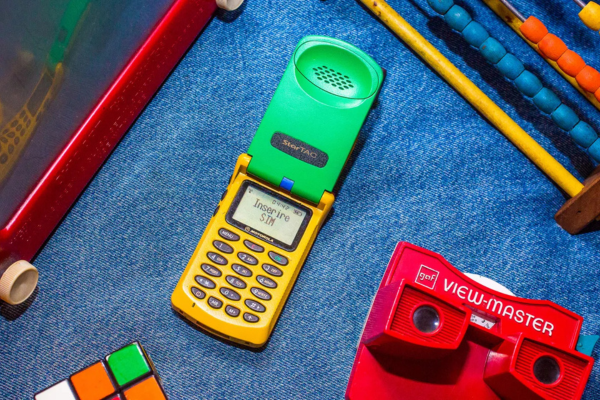
    Image Source: CNET


    Persuasion is most powerful when it’s grounded in a narrative context. You can have the most stunning visual, but beauty without a compelling narrative doesn’t convince policymakers or anyone in a position of power to execute real change. Richard Buday, the author of the article The Reality of Design Fiction: How Storytelling Can Save The World,” references a proverb that supports the previous statement perfectly. “What is truer than the truth? A Story.” Buday goes on to offer several pop culture examples that capture the essence of how films, stories, and novels that employed this philosophy moved the needle forward. My favorite example is how Star Trek showed us flip phones in 1964, and three decades later, Motorola sold its first flip phone, the StarTac. After understanding design fiction and how it’s a catalyst when it’s rooted in storytelling to persuade people, you can use a framework to create story-driven design.


    Story-Driven Design: A Framework for Visual Coherence
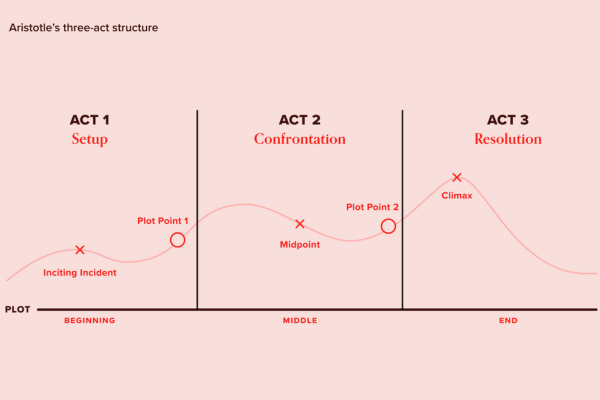
    Image Source: Smashing Magazine


    More often than not, people think writers are the only creators who need to rely on a narrative to connect with an audience. This is false. Designers use storytelling to create meaningful user experiences that are memorable. Award-winning designer Chiara Aliotta has trademarked a five-step framework to enable designers to create visual coherence.


    1. Understand Your Protagonist And The Purpose Of The Product

    2. Define the Structure of Your Narrative

    3. The Beginning

    4. The Middle

    5. The End


    The second step of this framework supports the idea that combining Aristotle’s three-act concept with the “StoryBrand Structure” by Donald Miller, a philosophy that stories must be a chain of cause-and-effect moments, creates the most clear sense of continuity throughout any narrative.


    One of the best examples I can think of to reference that supports this is the first season of the Netflix Original, “Stranger Things.” This is a sci-fi series based on a series of supernatural events that happen in a small town in Indiana, following a group of young friends who discover one mystery after another involving the government and supernatural forces.


    The first season of Stranger Things is a perfect example of combining Aristotle’s three-act concept with the StoryBrand Structure because there are three clear acts with a cause-and-effect narrative.


    • Act I: One of the main characters, Will, disappears and initiates the first mystery (Setup)
    • Act II: The group of children meets Eleven, a child with psychic abilities who is a government experiment, and eventually discovers the “Upside Down.” (Confrontation)
    • Act III: The group of children confronts the Demogorgon (monster) and saves their friend Will, who went missing (Resolution).


    Despite the fact that this is fiction, you can still leverage the hero’s journey to anticipate change and design future experiences that are a reality.


    The Hero’s Journey as a Tool for Designing a New Reality

    Image Source: TedEd


    The hero’s journey is one of the most popular concepts that is not only a storytelling tactic but also used in design thinking and trend predicting. It’s a great tool for innovation in the design process because it grounds very abstract and complicated ideas into simpler stories that are relatable and puts the user in the spotlight.

    Leah Zaid, an award-winning futurist, authored an article, How to Use the Hero’s Journey as a Design-Thinking + Foresight Tool, that details a simplified version of how you can conceptualize the hero’s journey as a designer to better understand your customers and target audience.

    Learning about patterns in action to understand what a narrative arc, hero’s journey, and how to storyboard taught me how design fiction can be a catalyst for change. Once I knew more about the why behind this, I was able to shift my attention to story-driven design, specifically how to use it to turn speculation into a narration that’s compelling and emotionally relatable. Lastly, I reframed the hero’s journey and learned about its relationship with change and how to tap into it for user journeys to design future experiences that can become reality.

    All of this leads me to believe that in our world of uncertainty, maybe the most powerful design tool we have is knowing how to tell a good story.

  • How Small Details Tell Big Stories

    Image Source: Generated by ChatGpt


    From the loud sirens, car horns, and hustle and bustle of working all day trying to grab a quick bite to eat at a street vendor outside of your city office, to the warmth of family laughter, smell of tomato sauce, and sitting at table bumping elbows waiting for an Italian family-style meal, food is a universal love language and no matter where you are, what you are eating, and who you are doing it with, there’s a story to tell.


    Stillness at Midnight After Meals

    Image Source: Pikwizard


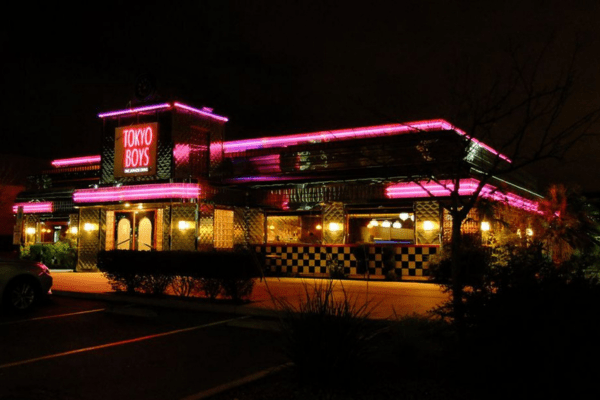
    Restaurants serve as windows into culture, emotion, and authentically show us who people are and what they value.  When it comes to diners, they serve as an American cultural icon of escapism. Maybe you’ve had a long night and want to indulge in that big omelet breakfast you couldn’t have because your boss needed you in the office early this morning, or you’re looking for somewhere to go on a Saturday night with your high school friends after the movies. The ambience of diners and this specific image lean into the second principle of visual storytelling, sensory. In a world that’s moving at a million miles a minute, the soft lights, cushioned booths, and brightly colored interiors create a sense of safety and reprieve. Let’s juxtapose this by looking behind the scenes of a restaurant.


    Behind the Pass: Pressure Meets Precision

    Image Source: Bon Appétit


    It’s the responsibility of a restaurant’s staff to control the chaos by orchestrating a perfect culinary symphony. Customers don’t see the grueling number of hours line cooks and their teams put in to unpack deliveries, prep all day, do research and development to refine a menu, and everything else in between to create magical memories for patrons. This is a glimpse of the culmination of all those hours of grit, sweat, tears, laughter, and smiles. What you see in this image is a dramatic storytelling technique. There isn’t much to interpret, and we are completely absorbed in the action, the line cooks prepping food. Shifting gears, it’s time to look at another image that evokes a different feeling.


    Pausing Before Pouring: A Morning Routine

    Image Source: SIPTHESTYLE


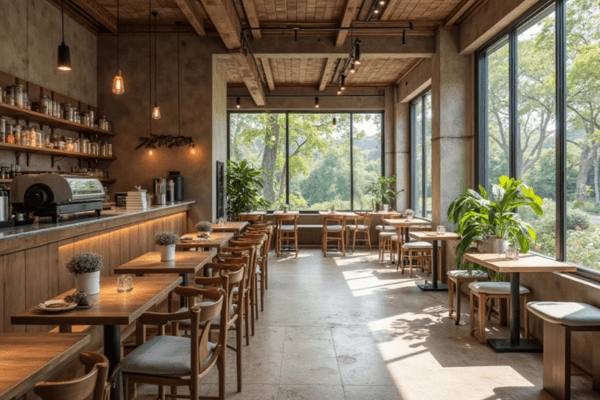
    Finding your version of peace and quiet to start your day is one of the best things you can do to boost your mood. For lots of people, that’s grabbing a cup of coffee or tea at a café like this one. Designing a café with large windows to let lots of natural sunlight in and outfitting its interior with plants and warm earth tone colors creates a cozy mood. This is the kind of space someone would want to work remotely from. In visual storytelling, creating and capturing a “moment,” a fleeting bit of time that creates emotion and empathy, is one of the toughest things to do. This picture is focused on a very specific moment, the opening of this café.


    The Theatrics of Taste


    Image Source: Kobé Ichiban


    A restaurant experience can be make or break based on the taste of your food and the service. Something that’s often forgotten about or pushed aside? The entertainment factor. Hibachi is one of those restaurant experiences that zeroes in on this. Whether it’s your birthday, a graduation, or maybe an anniversary, this type of restaurant’s main goal is to make you laugh, smile, and take a picture or video to show your friends what you did. The chef’s facial expression and the flame flaring up from the grill capture this emotion perfectly.


    Sizzling Sounds Underneath Street Lights


    Image Source: Eater


    Grit and drive. Those are the first two words that come to mind when you see food vendors on popular boulevards in the downtown of a densely populated city or urban neighborhood. The composition of this picture goes beyond telling a story of just this woman grilling meat. The image gives you contextual clues that she’s in downtown Los Angeles based on following the rule of thirds. You can see the Roosevelt Hotel sign in the upper middle grid and a Hollywood star on the lower right-hand grid.


    Conversations Can Come in Small Plates


    Image Source: Visit Philadelphia


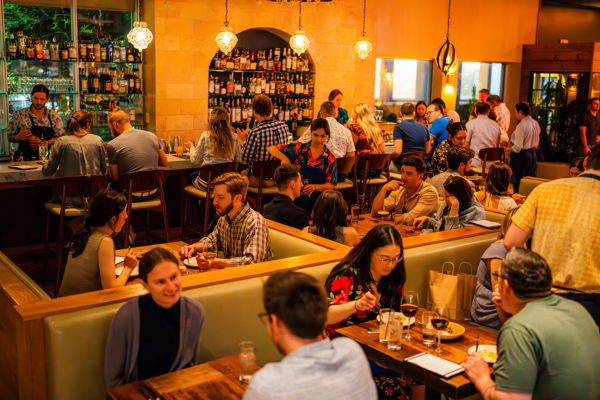
    One of the most important visual storytelling concepts is to show, don’t tell. This picture is doing that perfectly. I immediately hear many conversations happening and the noise of a tin shaker pouring a new cocktail into a glass. The yellow, orange, and green colors exude a warm and approachable atmosphere that’s still chic. This picture gives enough context to viewers to think of what type of archetype would dine here. Someone who values higher quality food and beverage experiences, who is maybe trying to get away from their child to have a date night with their significant other. Turning the page, let’s look at one more restaurant picture.


    Generations Around the Table: Tradition in Every Fold


    Image Source: Cincinnati Magazine


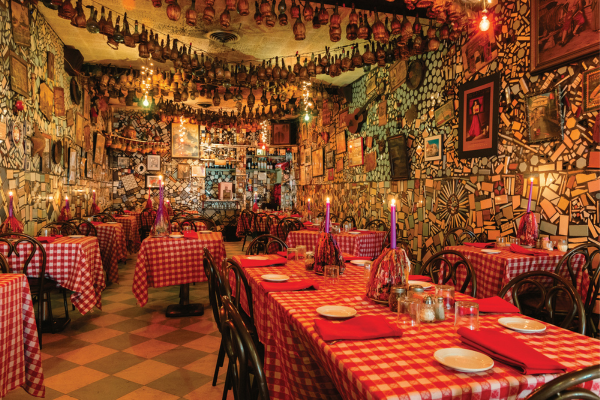
    Generational depth and legacy are woven into the DNA of family-style Italian restaurants. The candles lit at each table, the red plaid tablecloth folded perfectly, this scene represents casual dining that evokes a friendly and homey feeling. This image follows a non-dramatic storytelling framework, created from different perspectives, and requires the audience to complete the picture themselves.


    Restaurants, cafes, and food vendors around the world all carry human stories behind every meal and interaction. The smallest details, like the position of someone’s body, where their eyes are looking, and what’s on the table, are visual cues to what the mood of the moment is. When you consider elements of visual storytelling, including composition, sensory feelings, and whether it’s dramatic or non-dramatic storytelling, your connection to that photo is stronger, and you can create a full story to tell.

  • The Key to Becoming a Flower that Flourishes Through Concrete

    Image Source: Generated by Copilot


    When you gain enough self-awareness to realize that it’s your job to create an environment that meets your needs, it lights a new fire in you. Being imprisoned in a culture that pushes you to primarily interact with screens instead of using your imagination is ruining your attention.


    There’s a strong body of evidence that supports this claim as one of the biggest problems for children. I am going to spend a few minutes taking it one step further by explaining how this applies to anyone and why you need to demystify motivations and be wary of becoming a jack of many trades, but master of none.


    Demystifying Motivations


    Decades of research and thousands of studies have proven there are two types of primary motivation. Intrinsic and Extrinsic. Johann Hari, author of “Stolen Focus: Why You Can’t Pay Attention – How to Think Deeply, uses a great metaphor of a runner to explain the contrast of these two motivations.


    “If you go running in the morning because you love how it feels, the wind in your hair, the sense that your body is powerful, that’s an intrinsic motivation. Now, imagine you go running because you have a drill sergeant dad who forces you to go with him. Or you go running to post a shirtless video on Instagram for the likes. This is an extrinsic motivation. You are not doing it because the act itself gives you pleasure or fulfillment.”


    Image Source: NPR


    The author and researchers he’s interviewing about this concept conclude that it’s easier to focus and stick with it when your motivations are intrinsic.


    When I think about my extrinsic and intrinsic motivations, I couldn’t agree more. One of my intrinsic motivations is playing Pickleball. I play regularly, not to impress anyone specifically or get something out of it, but because I truly enjoy the game. I’ve noticed my attention on the court is very sharp, and I am steadily improving over time because I am focused. In contrast, one of my extrinsic motivations is going to the gym. I don’t go out of pure joy of working out; my main motivation to go is to get in better shape and stay healthy. During the digital detox experiment several weeks ago, I really noticed the contrast when I would find myself on my phone in the gym with minimal attention and focus on the exercises.


    I believe creating a balance of intrinsic and extrinsic motivations is one of the best ways to regain your attention and focus.  


    Jack of Many Trades, Master of None


    Throughout life, you’re exploring hobbies to develop passions, and just like how seasons come and go, so do your hobbies – especially throughout childhood as you’re establishing an identity.


    When thinking about how to regain focus and attention while reducing anxiety and stress, regardless of age, one thing comes to mind for me. Setting attainable goals. According to an article from NPR, practicing these skills can help build a reservoir of positive energy that you can draw on when it’s time to cope with challenges or annoyances.


    Image Source: NPR


    This article cites further evidence from neuroscience research that shows repeated practice of certain positive emotions can even change our brains.


    Although the idea of freedom and confinement mentally and physically is one of the biggest challenges children face today regarding their attention and focus, I believe it’s something impacting people of all ages.


    One of the best things you can do is take a step back and demystify intrinsic and extrinsic motivations to understand how to harness the positivity of both types in your life. Also, avoiding falling into the trap of letting an environment convince you that you’re a jack of many trades, master of none, will help you get one step closer to regaining your attention, deepening your focus, and not letting anyone or anything hinder your creativity, social bonds, or lust for life.

  • How Orchestrating Organized Chaos Frees up 99% of Your Headspace

    Image Source: Generated by Copilot


    Developing a process to capture your thoughts, turn them into actionable tactics, and streamline working with a team to achieve a shared outcome are a few of the backbone principles of project management. Regardless of your job, industry, and experience, good project management compared to poor project management can make or break the success of your work, and overall joy of a job or project.


    After learning about some of the history and methodologies, and creating a project management workspace for myself, I have two pieces of advice for how anyone can orchestrate organized chaos to overall improve processes and collaboration with others.


    Use Kanban to Implement K.I.S.S.


    One of my favorite concepts that my manager at my first full-time job taught me was the K.I.S.S. rule. Keep it simple, stupid. This is a cheeky reminder to avoid unnecessary complexity, whether you’re working with the CEO of your company or explaining to your 5-year-old son what you did at work during the day. It’s a fantastic design principle to remind you that simplicity is a key to success.


    Creating a Kanban with Trello and using it as a project management tool is one of the best ways to implement K.I.S.S.


    Image Source: Interaction Design Foundation


    As you can see in the two pictures below, I stayed true to the roots of a Kanban by designing a system with three stages that tracks how my tasks (parts) need to move through stages to completion (production within the factory).


    Image Source: Created by Author


    Image Source: Created by Author


    Reality is a Roller Coaster: How to Make the Ride Smoother


    One of the biggest upsides I found with creating this Trello board and learning about project management is that it’s not a linear process. Implementing Trello as a project management method is a low-effort, high-impact strategy. It enables you to quickly get organized and move through your work with minimal confusion, and creates more efficiency for yourself and your team.


    Something that stuck with me regarding the general and historical overview of project management is the fact that the common, clear indicators of a successful project are determined by factors like:


    • Completion on schedule.
    • Staying within budget.
    • Producing work aligned with agreed upon quality standards.


    Using a Kanban in Trello as an agile project management method gave me instant flexibility, was easy to control how much work is in progress and how granular I want to go with tasks so I could improve my overall focus and avoid overload, and has a visual display that uses colored labels to organize and create easy associations in my head for me to better remember and prioritize, almost like a version of a mind map in some ways.


    Whether you start using Trello for your project management, or another popular platform like Basecamp, learning about the history of project management, doubling down on a Kanban as an agile method, and implementing it to get organized, focused, and make your roller coaster ride smoother is one of the best ways you can free up headspace and orchestra whatever organized chaos is in your life.