Tag: design

  • New Haven Pickleball’s Brand Promise: More Than Just a Game

    Image Source: Photograph taken by Steve Walter

    At its core, all brands are a promise. Usually, the first thing that people picture when they hear the word “brand” is a logo, colors and some type of slogan. Gathering all these components together to tell people a story and effectively communicate whatever good or service you are selling is how you succeed in creating a successful brand that changes someone’s life. Taking this visual design course taught me to think about branding holistically from the perspective of a designer. Specifically, how every little decision whether it’s using a chunky serif font to evoke an assertive tone, choosing a balanced trio of colors, or creating a certain style of illustration on product packaging to target an audience; all these decisions add up to the total sum of what makes a brand memorable.  

    The culmination of these design skills I learned over the last seven weeks is on display in the new brand guidelines I designed for New Haven Pickleball. This is a community to connect with local, fellow pickle-ballers. No matter if you are brand new to this brilliant game or prepping for the day it is in the Olympics, you are welcome! I discovered this community in the summer of 2024 and almost one year later, have met many incredible people that I play Pickleball with regularly. Creating brand guidelines for New Haven Pickleball was a fun, yet challenging process since the brand had no foundation to work off besides a name and a few social media pages. I’m going to take you through an aspect of the brand guidelines that is one of the most vital components to making this brand what it is.

    Verbal Brand

    Regardless of the company or organization, the anatomy of all brands has a verbal brand component. For New Haven Pickleball, all it had was name. When you really think about it, a verbal brand is so much more than a name, it’s your company’s slogan, personality, tone of voice, and style of language.

    After reading a chapter on branding from the book “Graphic Design For Everyone” by Cath Caldwell, I understood what all of these parts of a verbal brand meant. After thinking, research, and some trial and error, I decided to change the name of this company to NHV PB, created the slogan “Community > Competition”, and established its values are inclusivity, positivity, learning and passion.

    These decisions about NHV PB’s verbal brand set the tone moving forward for the copy I used on marketing collateral including an event poster, brochure about the spring league, and a home page design comp for a website mockup.

    The slogan, “Community > Competition” might be the most important aspect of NHV PB’s verbal brand. This company is mainly a community. The “good” it sells is the sense of belongingness, camaraderie, and the opportunity to consistency play pickleball. Using this phrase as a slogan that appears on print collateral, merchandise, and digital properties echoes inclusivity as a brand value and welcomes players at all levels while still validating the legitimacy and opportunity to progress and get better at pickleball.

    I look forward to learning more about visual design and the opportunity to potentially work with the league manager who created New Haven Pickleball to implement some of these brand guidelines.


    Sources

    Caldwell, C., & Skene, R. (2019). Graphic design for everyone: Understand the building blocks so you can do it yourself. Dorling Kindersley Limited.
  • From Lens to Canvas: Crafting Emotional Connections in Design

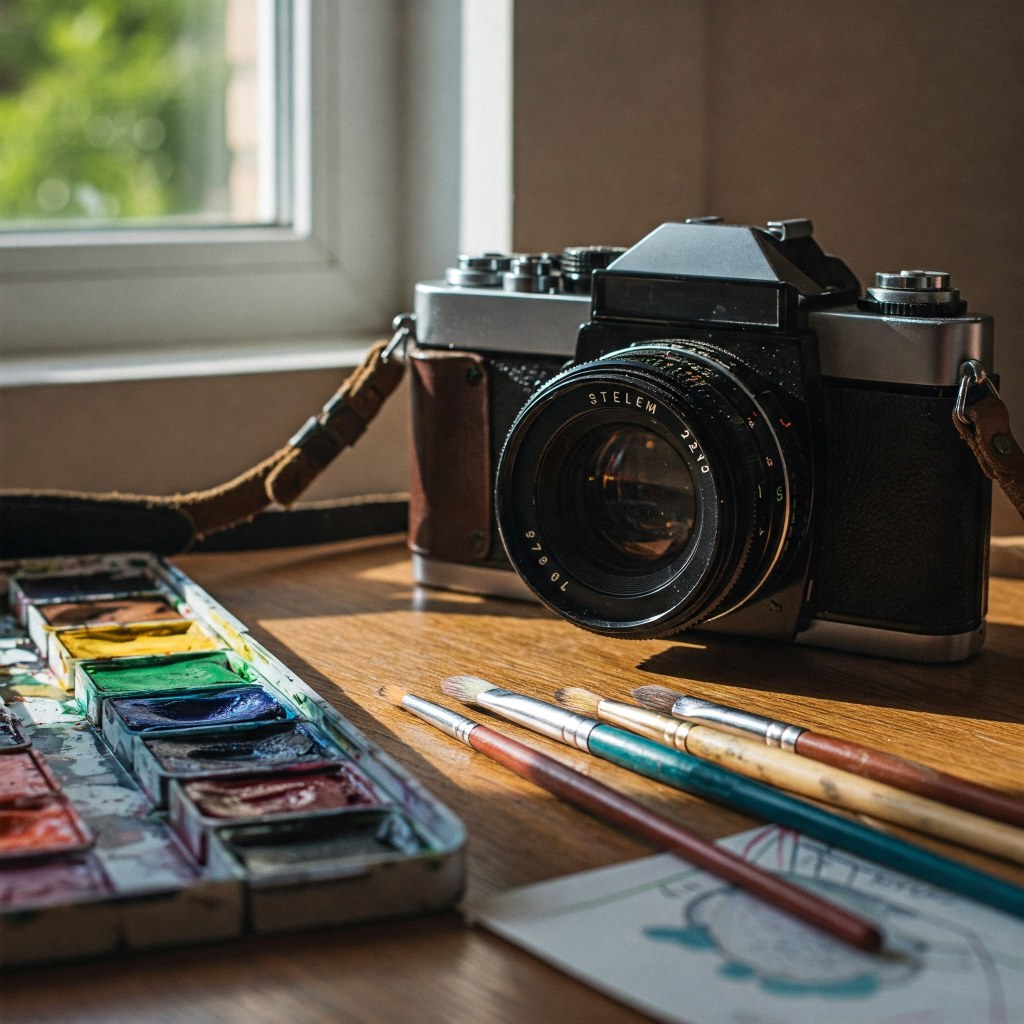
    Image Source: Generated by Google Gemini

    Conveying information to elicit an emotional response is one of the most powerful skills a designer can master. From photos to hand-drawn illustrations and even digital artwork, each form of imagery is a core component of graphic design. Something that stood out to me in this learning module is the juxtaposition of Illustration and Photography. Specifically, what illustrators can convey vs. photographers, the factors in the decision process illustrators go through when choosing a style, and the intersection of goals illustrators and photographers share. Let’s dive in!


    Photography: Capturing the Moment

    Photography is your best friend if you are trying to visually depict a product, establish a mood, and ultimately build a relationship with your target audience. A few of the most practical outcomes that photography creates for graphic designers are the ability to sell a product, establish trust, tell a story, or teach a technique.

    For my semester-long brand project, I am working on creating a visual and verbal “Brand DNA” for New Haven Pickleball, a local pickleball community I am part of. Using photography that captures pictures of people serving, dinking (a light touch hit in pickleball), and drop shots can showcase the wide variety of shots in pickleball and teach members of this community proper form for these different types of shots.


    Illustration: Carefully Crafted

    Illustration is typically a form of art that depicts a product or location. One of the most valuable aspects of illustration is its ability to convey abstract concepts. Because of its versatility, illustration usually enables designers to reach their target audience in ways that photography typically can’t. A few of the best examples are creating reality with personality, showing how, revealing what lies beneath, imagining prehistory and fantasy, and visualizing a complex idea.

    Continuing with the example of the New Haven Pickleball organization that I am doing my “Brand DNA” project on, creating an illustration to showcase different types of paddles and the various materials that make up a pickleball paddle and how they impact the type of play style it favors, would be a great example of how an illustration would work best instead of a photo.


    The Decision Tree: Differences & Similarities

    If you’ve identified wanting to use or create an illustration for your brand/company, there are a few essential things to consider. The purpose of the illustration, its overall brand (mood, tone of voice, being reflective of the brand’s personality), understanding who your audience is, and the medium that your illustration is being designed for (where most of your audience is viewing it). I would likely choose a freehand digital style for any illustrations for New Haven Pickleball because it would enable me to use the brand colors freely which range the spectrum from bright to dark. This would also help me evoke the brand’s chatty and informative personality without being forced to use an illustration style that comes off as childish, luxurious, or serious, which wouldn’t appeal to most of my target audience.

    For photographers, the decision-making process looks a bit different. After a photographer decides what they’re shooting as a subject and are ready to go, they need to consider the following factors to get the best composition that’s appealing and impactful; fitting the format to the subject (deciding if horizontal or portrait format makes sense), using the rule of thirds, considering the background, and using lines to lead the eye. If I were shooting some pictures for New Haven Pickleball, I would use a portrait or vertical frame for photos of a pickleball paddle to capture its entire length. I would also capture some low-angle shots from the ground and use the court lines to lead the viewer’s eye to showcase some photos of people playing a game of pickleball in an interesting way.

    Anyone can take a photo or create an illustration, but getting the most out of either form of imagery is crucial to being a successful designer who knows how to tell a brand’s story and convey its emotion. I hope you learned a bit about the differences between photography and illustration and how both can elevate your brand and take it to the next level.


    Sources

    Caldwell, C., & Skene, R. (2019). Graphic design for everyone: Understand the building blocks so you can do it yourself. Dorling Kindersley Limited.
  • Evoking Emotions Through Writing: Why Typography is Branding’s Unsung Hero

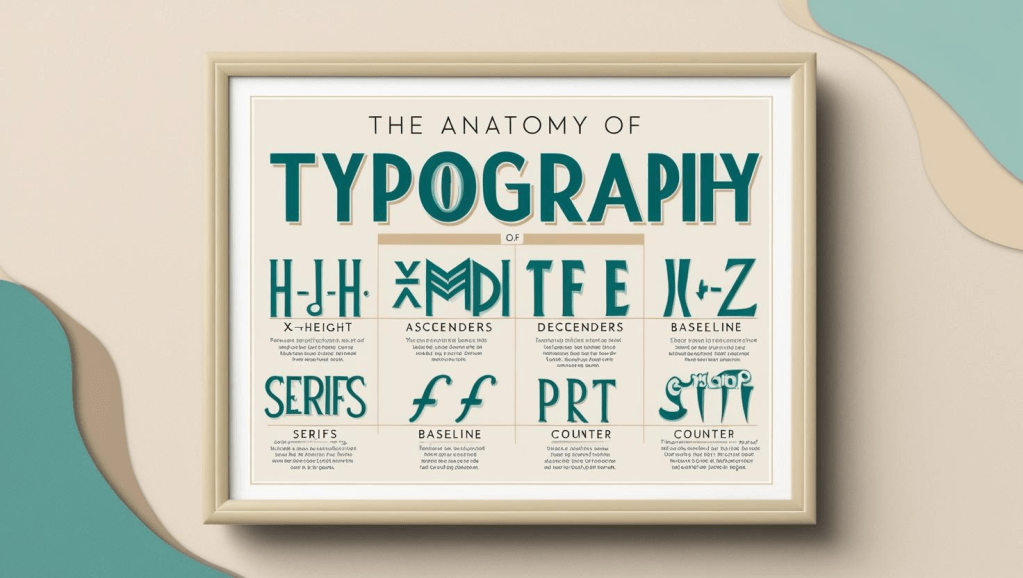
    Image Source: Canva Dream Labs AI Generator

    Every day, the average person reads about a dozen different typefaces. Whether it’s a billboard for a new business that opened in your neighborhood, the recipe for a meal in a cookbook, or a television broadcast of your baseball team. Typography is one of the most powerful tools to convey emotion. Although it’s something most people seldomly think about in terms of understanding its core components and how to use it to convey specific moods, it is one of the most powerful tools a designer can have in their arsenal.

    After thinking about this week’s readings, videos, and assignments, I’m going to delve into the anatomy of type, explaining how several core components make up a typeface and ultimately the mood it conveys.

    Every Major Cog in the Machine

    After reading the first section of chapter 2: building blocks in the book, “Graphic Design for Everyone” it started to click for me. Just like the technology we have that uses lots of parts to make a device work, Typography has a nuanced anatomy with various components that make up its structure to create different typefaces. I’m going to teach you about three different components that make up the structure of a Typeface for you to better understand how designers can manipulate these things to create different typefaces.

    Ascenders

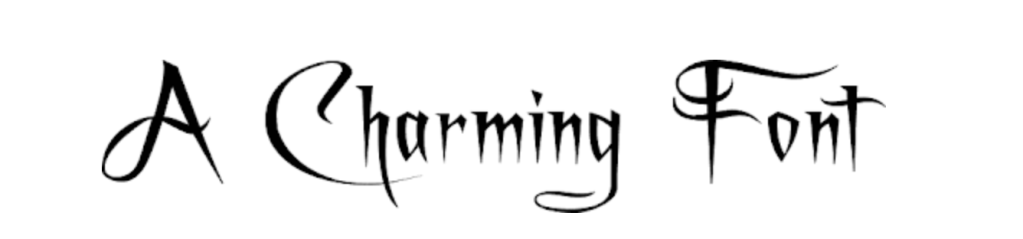
    The first component I want to examine is the ascender. An ascender is the part of the lowercase letter that extends above the x-height (the height of a font’s lowercase x). If a designer selects a font with high ascenders, it’s usually because they want a letter to be easily distinguishable. You’ll see this often with book titles, such as the example pictured below which would be used as a font for a fantasy book.

    Image Source: Creatype Studio

    Bowls

    The next component we’re going to look at is a bowl. This is the curved stroke that creates an enclosed space. This is a significant element of type design because the size, curvature, and proportions of the bowl can vary significantly depending on what typeface you’re using. A great juxtaposition to look at to better understand the bowl, is comparing the letters R and B and this article titled Typography design 101: a guide to rules and terms” explains it perfectly.

    “The letters B, P and R are sister shapes, one being derived from the other. However, that doesn’t mean they have the same proportions. The bowl of the R needs to be slightly thinner so that when we connect the leg to it, it won’t become super thick. While the upper bowl of the B needs to be smaller than the bottom one, so that the letter appears more stable.”

    Image Source: 99Designs

    Serifs

    One of the most prevalent components in all typefaces is the presence or absence of a serif, a small, decorative extension at the ends of some strokes. This component defines whether a typeface is a serif type, or sans serif type. Serif types have this decorative extension and sans serif types do not. When you compare the two next to each other you can immediately tell a different mood is set. Serif typefaces typically look authoritative, professional and serious. Sans serif typefaces are usually quirky, whimsical and fun. Choosing these your typeface wisely based on your brand’s essence and expression can make or break your brand in terms of how it resonates with your intended target audience.  


    Although typography is the unsung hero when it comes to what the average person thinks of when they hear the word branding, understanding it and mastering it is one of the most useful skills a designer can build.