Tag: creativity

  • How Purposeful Practice Produces Progress

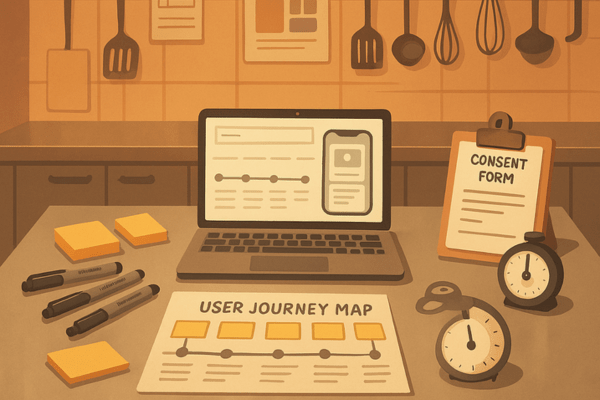
    Image Source: Generated by Copilot


    We have reached a significant turning point in the Design Sprint; it’s time for the ultimate test. Our PennyPal prototype is ready to move through the test and collect phase. This phase of the Design Sprint is an opportunity for our team to determine if PennyPal is a viable app for Gen Z users to learn about personal finance through education and entertainment. The goal of this phase is to ensure we selected the right participants for user testing, created the right types of questions and scenarios, and can analyze the data in an actionable way.


    The test and collect phase of the Design Sprint turned our concept into a reality and required all of us to go from the kitchen to the table by defining the ideal target audience and the ingredients to success, assemble and clearly brief the A-Team, and unpack the truth.


    From the Kitchen to the Table


    The amount of preparation, attention to detail, and speed that is in the kitchen behind closed doors to create that incredible meal and deliver it to a table successfully is not easy. It is the same case when creating a prototype in a Design Sprint and getting it to external user testing. To do this, you need to start by defining your ideal target audience. To define our target audience for PennyPal, we separated the large gamut of our potential Gen Z  users into three buckets: high school students 16-18, college students 18-22, and “early career starters” 22-28. For each of these audiences, we took time to learn their key traits and needs. Doing this led to successfully recruiting five participants, and then, we did what any good restaurant does: we sourced our ingredients for success. We created clear logistics, location, and duration for user testing and shared that with all five of our participants. Doing this eliminated any potential confusion, so they were ready to have a great experience that would give us rich data.


    To get this great meal to the table, aka get the prototype to the participants and begin user testing, we needed to “serve success,” which is making sure our team has created and can facilitate scenarios that reveal insights to define an actionable path forward for the following priorities: PennyPal’s growth, PennyPal’s strategy, PennyPal’s Brand DNA.


    This process reminds me a lot of the first step in the five steps to finding your target audience. According to this article by Adobe, audience targeting starts with a close look at your business’s products or service offerings and there are three steps to get your answer.

    1. Determine what problem your goods or service solve.
    2. Think about who’s most likely to benefit from your product or service solution.
    3. Define your unique selling proposition.


    Image Source: Adobe


    Assembling and Briefing the A-Team


    To set up your participants for successful external user testing, you can’t just put the bat signal out and hope for the best. If we wanted our participants to be the best version of an A-Team they could be, we needed to establish a recruitment plan and brief them on what user testing is. Explaining to our participants the value of user testing and that it’s important because it reveals underlying issues with the app, improves the user experience, and builds empathy helped make this experience enriching for everyone. One of my teammates also did a great job of establishing a recruitment plan by creating a consent form, communicating with participants via succinct emails, and sending out a calendar link to book a time to participate in the user test.


    Sprint: How to Solve Big Problems and Test New Ideas in Just Five Days by Jake Knapp talks about a concept called “The Five-Act Interview.” This is a structured conversation between the facilitator on the Design Sprint team and user testing participants to get comfortable and establish some background. Act 4: Tasks and Nudges, asking the user to do realistic tasks during an interview is the best way to simulate real-world experience. The facilitators on my team for the Design Sprint really leaned into this concept during all five of our user tests to create this atmosphere.


    Reflecting on the value of user testing also helped me realize that it really is priceless in the end. Many companies try to skip corners and take shortcuts by de-prioritizing user testing due to time, budget, or resource constraints. But skipping it altogether would be a massive shortcoming. If you don’t want to take my word for it, a research blog written by a revered prototyping app company named Marvel put it perfectly. “It’s a great chance to get to know your users. Learn who they are, what they want and why they need this product. How do they need it to function? How will it fit in to their day to day lives?”


    Image Source: Marvel


    Unpacking the Truth


    After we completed the external user testing with all five participants and they all finished a post-test survey we provided, we were left with rich data to dive into. Post-test survey questions revealed to our team great insights such as:


    • Overall, the app does a good job of incorporating education along with all its other qualities.
    • PennyPal’s core features prioritized Gen Z’s key traits and needs, with features like Daily Trivia and Goal Setting.
    • There’s a resounding connectedness to education, but room for improvement on the entertainment side of things.


    These rich insights connect directly back to the Design Sprint questions and long-term goals we established at the beginning of the process. Questions like, “Do our gamification features drive repeated engagement? And long-term goals, such as enabling users to set and achieve personalized financial goals.


    Identifying patterns and themes to connect these insights to decisions we can make about PennyPal, reminds me a lot of the reflection process we do at my job after one of our annual campaigns. I work with a team of development professionals at Quinnipiac University’s Development and Advancement office. My role is specifically focused on digital engagement (social media, email marketing, event registration webpage building). A team of eight people including myself held a retrospective after one of our annual fundraising campaigns and I brought to the group a few slides identifying a pattern of looking at our emails year-over-year and seeing how we changed the send address to use personal names instead of a general email alias, and the emails using personal names performed significantly better. This occurrence was me identifying a pattern to connect an insight for our group to react to and make a decision.


    This final stage of the test and collect phase of the Design Sprint reinforces why you should conduct a sprint early in the lifespan of your business or product launch. I came across an article by Fast Company that expands on this idea and explains the reasoning further in a very comprehensible way.

    “The ROI of customer research is greatest when the risk and cost of building the wrong product are high. But even when it’s easy to build an MVP to launch and learn, sunk cost fallacy can undermine a team’s objectivity and willingness to scrap their work. Why risk making a bad first impression when it’s easy to find and fix problems before launch?”


    Getting stakeholders to understand the truth behind this statement could make or break your Design Sprint.

    Image Source: Fast Company


    I’m looking forward to packaging all the work my team and I did over the last seven weeks to present the impact of a Design Sprint in a professional, understandable, and actionable way.


  • Why it isn’t the Tools, it’s How We Use Them

    Image Source: Generated by Copilot


    The imaginative process of Storyboarding created progress for PennyPal. It enabled our team to think through “what if” possibilities for our app and set us up to transition to the next stage of the Design Sprint that will address our goals and define how we can meet the wants and needs of our users. This next stint of our Design Sprint explores how we leveraged these storyboards to create PennyPal’s blueprint, defines what conditions we carefully curated as we move into user testing, and gives our team more clarity on why change is the only constant.


    Creating the Blueprint


    It was time to move on to the most difficult phase so far: Prototyping and Refinement. We needed to divide and conquer tasks as a team and ultimately build a realistic and clickable version of PennyPal. The prototype will have several user flows to showcase how various features work, including account sign-up, goal tracking, daily trivia, and the chat room. Our two designers, Chloe and Andrea, chose the suite of software to use to build this prototype, selected fonts that capture the brand’s ethos, found simple iconography, and stuck with PennyPal’s color palette to make sure everything was on-brand.


    Being crystal clear about design decisions, what the product breakdown is for key features of a prototype, and delegating tasks for each person on your team reminds me of Gemma Lord’s (a Design Director at IDEO) reflections on how the changing nature of design has given designers a seat at the top table. One specific point Gemma makes that resonated with me during this phase of our Design Sprint is:


    “I wasn’t there to design a product. My role, instead, was to shape the conversation itself – to ensure these leaders understood the trade-offs they were making, to help them see the long-term implications of their choices, to make sure that, somewhere amid the graphs and growth projections, the people their business serves were not forgotten.”


    Image Source: Design Week


    I noticed that these exact same reflections and feelings were top of mind for my team and I during this phase of the Design Sprint.


    Carefully Curated Conditions


    After our designers completed the prototype, it was finally time to test PennyPal for the first time. PennyPal’s main goal is to improve Gen Z users’ personal finance literacy in a compelling way that makes them want to come back to the app because of its entertaining and educational features. Facilitating a user test simulation internally helped the team identify what to fix within the prototype, test our moderator script to make sure any user would understand the three scenarios we want them to go through, and ensure the testing results are actionable insights to move forward.


    For user testing, I was the internal user test subject because I didn’t participate in designing the PennyPal prototype. I tried my best to stick to the three scenarios and remember the “prototype mindset,” a concept introduced to me by the book Sprint: How to Solve Big Problems and Test New Ideas in Just Five Days.


    “Building a façade may be uncomfortable for you and your team. To prototype your solution, you’ll need a temporary change of philosophy: from perfect to just enough, from long-term quality to temporary simulation.”


    The prototype mindset is something I use at my job regularly as well. One of my responsibilities is analyzing digital engagement metrics for social media and email marketing to understand what is and isn’t working. I use these insights to make and implement recommendations on how to market more effectively. I created a report share-out using the prototype mindset that it didn’t need to be perfect, but built out just enough to share data insights with my extended team. Doing this helped my manager and me understand how we can create a long-term quality solution over time that will be useful for everyone.


    The prototyping phase of a Design Sprint and completing an internal user test reveals the importance of the role UX plays in building brand consistency. Don Norman, a pioneer in UX design, said it best in his book The Design of Everyday Things. “When you have to explain how something works, it is a failure of design.”


    Image Source: Forbes


    Change is the Only Constant


    After we completed internal user testing, it was time to take these insights and learnings from our trial run findings to external user testing. Our trial run findings created the opportunity to refine our three scenarios and informed our team on how to complete external user testing to validate the prototype, test our original hypothesis, and collect usable data. The process of internal user testing and the insights that surfaced afterwards reminded me that change is the only constant.


    The Design Sprint is structured so that all stakeholders who participate in it experience iterative learning. This makes the sprint agile and productive. You and a team of people can define a problem, establish an environment to sketch solutions to that problem, design a prototype to test these solutions, and connect with a user base to gather real-world data to decide if you have answers to that original problem and can move forward.


    This phase of the Design Sprint showed me how user interface design and human behavior are both multidimensional. Jakob Nielsen, an author and pioneer of UX, stated it perfectly in an article titled The Usability Scaling Law: Death of User Testing?: “The complexity is immense; think of all the variables: user goals, prior experience, cognitive load, cultural context, device characteristics, and the sheer variety of tasks and information domains.”


    Image Source: Jakob Nielsen on UX


    I’m looking forward to the rich data we’ll collect from our external user testing in the next day of the Design Sprint to answer some of our challenges and really see how usable PennyPal is.

  • Walk Before You Sprint: The Overlooked Phase That Makes or Breaks Your Design Sprint

    Image Source: Generated by Google Gemini


    Where it all Started


    Before you and your team begin a Design Sprint, you need to take the necessary measures to make sure everyone is ready. With Design Sprints, there’s no such thing as overpreparation. Connecting with your team and client to onboard each person, define who is doing what, review the “run-of-show,” double check you have all the materials you need, and create several team agreements that are honored through the Sprint will guarantee its overall success.

    Let’s delve into a few of the steps I mentioned above to better understand the role each of these play in the preparation phase of the Sprint and how you and your teammates can contribute to each these tasks to get on the same page before beginning the Sprint itself!


    A Goal Without a Plan is a Wish


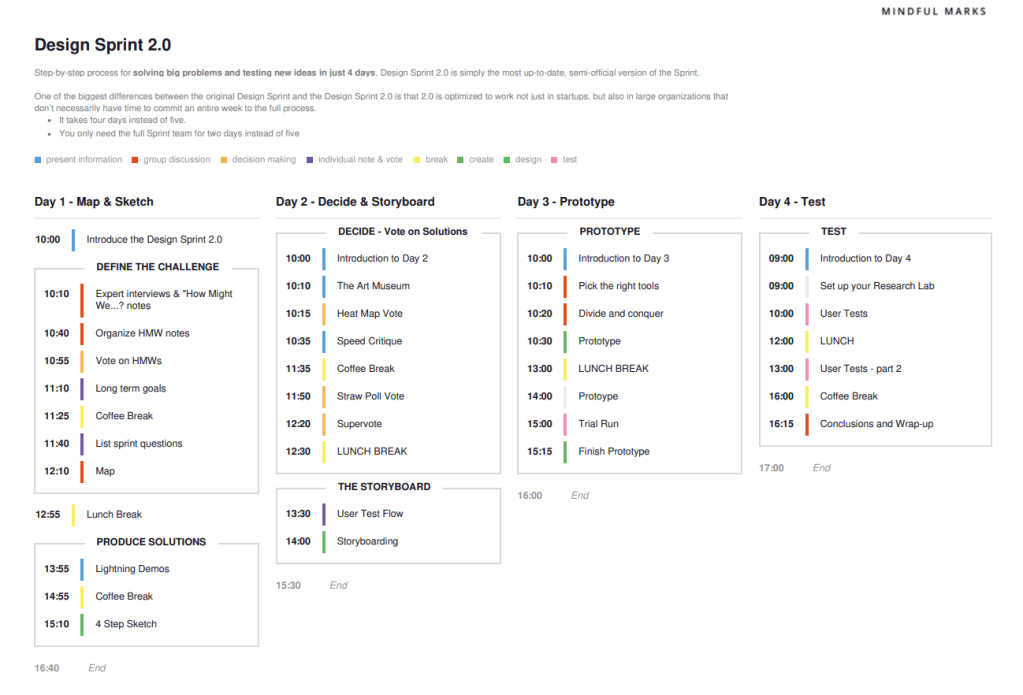
    If you want to achieve a certain outcome, you need to have an idea as to what your specific “challenge” is, and understand what and who it is going to take to solve it. With the Sprint process, you and your team use guard rails that serve as ground rules over the course of four days. Each day has several mini workshop sessions and the day itself has a theme, or an even better way to think about it is each day is broken out by one of the steps of the Design Thinking process. See the picture below to better understand what I am talking about.

    Image Source: Mindful Marks


    Why a Craftsman Needs to Sharpen Their Tools


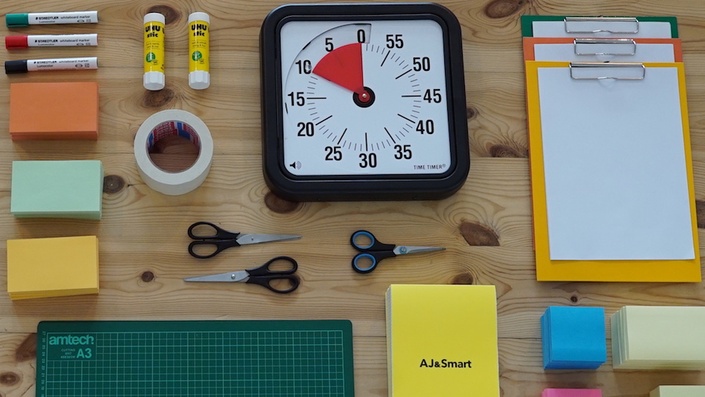
    Before you, your team, and client begin the first day of the Sprint, make sure you have all the supplies all of you will need for the next four to five days. If you are running the sprint virtually and everyone is remote, you can rely on tools like Miro for digital whiteboarding, otter.ai to transcribe notes from each day of the workshop, and Zoom to host the meetings virtually and record all of them. If you are doing the workshop in-person instead, you’ll need to have lots of office supplies to whiteboard and brainstorm in-person including but not limited to stickie notes, sharpies/markers, masking tape, and time (to name a few).

    Image Source: AJ & Smart


    Roles & Responsibilities: Everyone Has One


    I’m sure you’ve heard the phrase teamwork, makes the dream work. As cliché as it may be, this is especially true when you’re working with a group to facilitate a sprint. Everyone’s role and the responsibilities that come with it need to be decided ahead of time for the Sprint to run smoothly. As explained in the Sprint Handbook: a step-by-step guide to planning and running innovation sprints, each of these roles play a unique and critical part in the success of a Sprint. See below for just a few!

    • Notetaker:  Captures essential information during interviews and discussions.
    • Lead Facilitator: Guides the overall direction and maintains focus of the sprint.
    • Sprint Host: Ensures a comfortable and productive environment for everyone.
    • Prototyper: Translates ideas into tangible prototypes.
    • Interviewer: Conducts user interviews to gain insights.


    Image Source: Workshopper


    There’s No “I” in Team: How to Compromise


    The most impactful concept I learned in this stage of Design Sprints is the importance of creating Team Agreements. During the mini workshop we conducted this week as a team, this was one of the three exercises we had to complete together. Doing this collaboratively, enabled each one of us to learn more about what each person in the group enjoys about teamwork, what they find challenging, and then create several agreements that we can all use to bring clarity, focus and good vibes for the next 6 weeks of work we will do together. Here’s a few of the agreements we made.


    Team Agreements

    1). Be on time to our weekly Friday meetings starting at 1 p.m. ET and let the group know by Wednesday if you can’t make it due to an extenuating circumstance.

    2). Keep phone on silent and/or do not disturb during our team meetings.

    3). Dedicate the first five minutes of the team meeting to “catching-up.”

    It’s not possible to over prepare for a Sprint Workshop. Preparing for a sprint Workshop is just like walking to warm up before running a race. Walking before running is often overlooked and an afterthought, but without it you’re ten times more likely to cramp up or maybe even pull a muscle. Metaphorically speaking, the same goes for preparing for a Sprint. Without all these layers of preparation you, your team, and client aren’t going to have a successful sprint. After preparation is complete, it’s time to move into the first phase of the sprint. Map + Sketch.

    Sources

    Belle Hastings, P. (n.d.). The Sprint Handbook: a step-by-step guide to planning and running innovation sprints.

    Knapp, J., Zeratsky, J., & Kowitz, B. (2016). Sprint: How to solve big problems and test new ideas in just five days. Bantam Press.

  • The Infinite Iterative Loop

    Image Source: Generated by Google Gemini


    When it comes to problem-solving, regardless of the issue, you must think creatively to come up with a solution. Usually, your first step is to get a grasp of the situation. After that, you move on to creating a hypothesis. Once you’ve created a hypothesis, you start generating ideas. Next, you develop a demo of what you are trying to produce, and lastly, you release a version out into the world for a set audience to test and utilize.

    These steps I just listed are the core components of Design Thinking, a type of problem-solving that focuses on human-first design using an iterative process. To better understand Design Thinking, we are going to look at its origins, examine the guiding principles of the sprint process, and uncover what types of problems sprints are great at solving.


    Where it all Started


    The roots of Design Thinking go back to the 1960s. What started as a novel concept grew into a widely embraced strategy that could not stop accelerating. Design Thinking became mainstream and solidified as an approach to innovation in the late 20th century. Several people and institutions played a role in its mass adoption. David Kelley, the founder of IDEO, a global design company, is credited for shaping and promoting the version of Design Thinking that millions of people use today.

    This new movement sought to redefine the design process, including how interdisciplinary creatives collaborated, the emphasis on empathy, and shifted focus on iterative problem-solving. After Design Thinking had proven its value through popularization and widespread usage, companies and individuals at the cutting edge of technology and innovation created the “Sprint.”


    This Time it’s a Sprint, not a Marathon


    One of the biggest byproducts of Design Thinking is the Sprint, a method that solves problems quickly and validates ideas in a compressed timeline of five days instead of several months. A Sprint is comprised of four guiding principles.

    • Working Together Alone: Sketch, ideate, and create on your own, then come back together.
    • Tangible Things Over Discussion: Focus on discerning, deciding, and getting ideas into the world as tests.
    • Getting Started Over Being Right: Embrace ambiguity. Become risk-tolerant.
    • Don’t Rely on Creativity: Leverage time-based exercises that use frameworks to ideate and create.


    When at a Crossroad, Which Path to Take


    When it comes to developing innovation and solving problems, many companies struggle with deciding when to run a Sprint or if it’s even worth doing so from a timing and resources perspective. The best thing to do, is remind yourself that running a Sprint allows you and your team to test ideas and learn quickly while minimizing the risk.

    Here are a few examples of when it’s best to run a Sprint!

    1. When starting a new project.
    2. When seeking to improve an existing product or process.
    3. When seeking user validation.
    4. When fostering collaboration and team alignment.


    Design Thinking and the facilitation of a Sprint are iterative processes that are infinite, just like a loop. Even after you launch your product to market, even if you solved the original problem that was defined, it’s more likely than not you’ll have a new problem to solve or a specific thing your users want to see improved. Starting the Design Thinking and Sprint process all over again.


    Sources

    Belle Hastings, P. (n.d.). The Sprint Handbook: a step-by-step guide to planning and running innovation sprints.

    Knapp, J., Zeratsky, J., & Kowitz, B. (2016). Sprint: How to solve big problems and test new ideas in just five days. Bantam Press.