Tag: business

  • Why You Shouldn’t Underestimate the Power of Doing Nothing

    Image Source: Generated by Copilot


    The year is 2025. You wake up, immediately check your phone, rush to get to work, spend the day sitting at your desk typing away, scroll through your phone at lunch with your eyes glued to the screen, come home and unwind by watching Netflix while texting your friends, go to bed, and repeat it all over again the next day.


    When was the last time you started the morning with a walk without your phone? Or went to a nearby deli for lunch to enjoy a meal by yourself, sitting at the table outside, staring at the clouds.


    As pressure continues to pile up on all of us every day to stay connected with the world and stimulated by all the noise that comes with it, I would love to have just a few minutes of your time to explain to you why doing nothing can sometimes be the best reset for you.


    Decoding the Message & Deciphering the Medium


    We are regularly communicating with tons of people in several ways. Texting, phone calls, emails, social media direct messages and comments, Snapchat, to name a few. Johann Hari, author of “Stolen Focus: Why You Can’t Pay Attention – How to Think Deeply Again,” tries to make sense of this concept and provides a clear metaphor to understand how you can decode messages and decipher which mediums they’re coming from. “Every time a new medium comes along, whether it’s the invention of the printed book, TV, or Twitter, and you start to use it, it’s like you are putting on a new kind of goggles with their own special colors and lenses.” I believe Johann is right. Once you develop self-awareness and understanding of what someone is communicating to you and know why they chose to deliver it in that way, you will strengthen your relationships with others.  


      Image Source: Remark


      Haste Makes Waste: Mind Wander Instead


      There’s an overarching fear amongst most people that boredom is a waste of time and useless. What if I told you that’s wrong and there are clear benefits you are missing out on? One easy way to think about this is to look at the animal kingdom. Naturebang, a radio show by BCC, partnered with psychologists and professors to explain why we should be doing a whole lot more… nothing.  “The natural world seems like a busy place. But the truth is that most animals spend most of their time doing nothing. We’ve created a society where we fear boredom and we’re afraid of doing nothing. But in trying to avoid boredom, we miss out on its benefits. When we’re bored, we daydream, and that has been linked to creativity.”


      Whether you are an ant watching others in your colony forage, or you’re a 20-year-old in college studying for your physics final, something all forms of life have in common is the inability to create time. None of us should fear this; instead, we should embrace it by doing nothing and taking a step back to understand the different messages we receive, the mediums they go through, and let our minds wander.


      Image Source: BBC


      I’m excited to learn more about the data associations and specific techniques I can use to think deeply and regain my attention.

    1. Finding Your Flow: Uncovering Where Focus is Hiding From You

      Image Source: Generated by Copilot


      With peeling an onion, you realize how many layers there are until you reach its core. Just like an onion, when you consider the crises of our diminishing collective ability to hold attention, there are many layers to understand it. The concept of “stolen focus” goes far beyond an individual’s personal relationship with technology. It has been accelerated by the ecosystem of our world.


      Johann Hari, an accomplished author, explores this topic deeply in his book “Stolen Focus: Why You Can’t Pay Attention – How to Think Deeply Again.”  As Johann chronicles his pursuit of a digital detox and discusses what the first month is like, there are two core concepts that stand out to me as potential explanations as to why we can’t hold our attention anymore and what we can do to improve our focus.


      Why Your Word Means Everything


      A universal truth proven by social scientists is that whenever someone wants to overcome a destructive habit, one of the most effective methods is pre-commitment. According to Johann Hari, this is when “the you that exists in the present right now wants to pursue your deeper goals and wants to be a better person. But you know you’re fallible and likely to crack in the face of temptation. So, you bind the future version of you. You narrow your choices.” Pre-commitment manifests in several areas of my life, but one that comes most to mind is my connections, like my bond with my brother. When I make a promise to my brother or confirm I’ll do something with him, I mindfully create space in my calendar and organize my other social activities, career commitments, and personal chores using a calendar and planning system to pre-commit to him. Doing this with him and several of my other friends has greatly improved my relationships.


      Listen to Understand, Not to Reply


      It’s easier than you think to fall into the trap of conversing and connecting with people in a way that’s only self-serving. One of the most common ways this shows up is through narcissism, a corruption of attention where it’s turned in only on yourself and your ego. When I think about how listening with intention shows up for me in my life, especially at work, a few of these tips from Harvard Business Review are ideas I practice to do my best at becoming a better listener.


      1. Give 100% of your attention.
      2. Do not interrupt.
      3. Do not judge or evaluate.
      4. Do not impose your solutions.
      5. Ask more (good questions)

      Image Source: Harry Haysom Getty Images


      As I start to consider how I can strengthen my ability to focus, I have several ideas about simple lifestyle changes I can make, like setting app limits to reduce my screen time, minimizing distractions, and piloting learning methods like the Pomodoro technique to try to improve my focus and memory. I’m looking forward to learning more about what’s causing these diminishing returns and what other areas of life are most impacted.


      Image Source: verywellmind


    2. PennyPal: Case Study


      A team of product designers, researchers, and communication strategists assembled to create PennyPal, a personal finance app targeting Generation Z to empower individuals with knowledge and skills to confidently manage their money, learn how to budget, and plan for a long-term, successful financial future. Over six weeks, we created PennyPal using the Design Sprints frame­work founded by Jake Knapp, a Designer who worked for Google Ventures. We completed the five Design Sprint phases as weekly workshops over Zoom. Using the visual whiteboard tool Miro and the design platform Figma, five of us collaborated successfully to define Design Sprint questions and long-term goals, assess the landscape and source inspiration, come to a consensus as a group, build a prototype of PennyPal, and connect with our target users to determine its viability and an answer to our question(s).


      Sprint Overview


      The Design Sprint methodology we followed is the Google Ventures framework that I mentioned above. This process guided our team through the following five phases.


      1. Phase 1: Map & Sketch – Understanding and defining what the problem(s) are that we’re trying to solve.
      2. Phase 2: Decide & Storyboard – The transition of ideas becoming actionable plans to progress solving the previously identified problem(s).
      3. Phase 3: Prototype & Refine – The creation of a tangible, clickable form of an idea that functions for real-world testing.
      4. Phase 4: Test & Collect – The moment of “truth” to gather real feedback for the first time.
      5. Phase 5: Reflect & Report – Reviewing and charting a course forward after analyzing all the data.


      Problem Statement & Research


      A person categorized in Generation Z (Ages 13-28) should use the educational smartphone app PennyPal to discover the ins and outs of financial literacy, improve their long-term bud­geting habits, understand best practices for saving, and learn how to build an investing plan.


      Sprint Activities


      1). Map & Sketch


      Creating a user map was a stand-out moment in this phase. Designing this after we selected the Sprint questions and long-term goals we are focusing on enabled the team to create a shared understanding of what a typical user would experience using PennyPal.

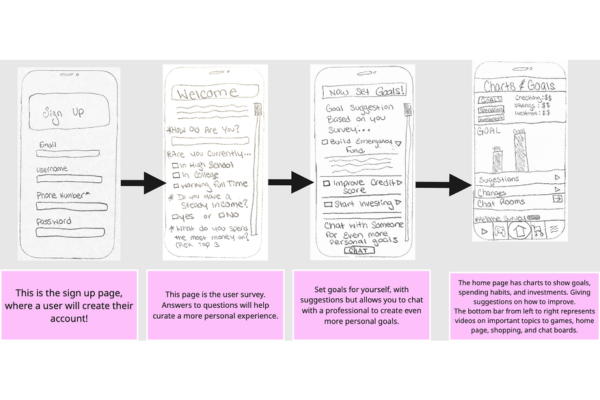
      We focused on a couple major features like starting with a sur­vey about the user, having a fun learning system about finances, and rewards to encourage the user to continue consuming the content. Our goal for the map was to make sure that once the Gen Z user learned everything, they would be proficient and confident in managing their finances.


      2). Decide & Storyboard


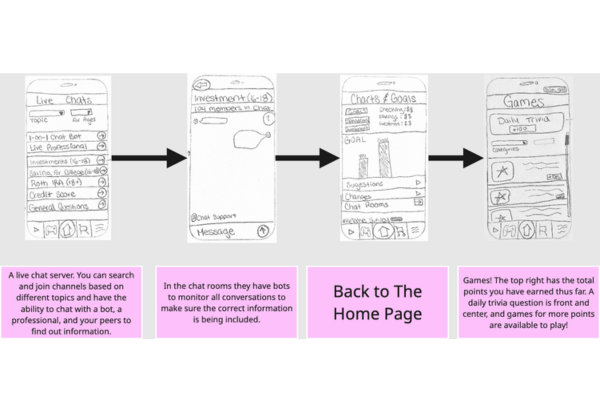
      With Storyboarding, you create a step-by-step visual plan that outlines what your prototype will look like and how a user will interact with it. Something that resonated with the team from Storyboarding is how going back to the home page is accounted for in the beginning, middle, and end of the Storyboard. That’s a very typical interaction to have with an app. It’s like a soft reset, where once a user has explored a specific feature of the app, they’re very likely to go back to the home page to see any new announcements and go to another feature. One more aspect of our Storyboard that the team thinks is strong is the overall singular focus and clarity. This process set our team up well for the next phase of the Design Sprint, prototype & refinement.


      3). Prototype & Refine


      After our team had a strong understanding of what the PennyPal app product breakdown is, knew their task assignments, and built wireframes, it was time to build a high-fidelity prototype. We chose to first create an “App Map” in a platform named Marvel to understand what the hierarchy of PennyPal would be, and then transitioned to using Figma to create a high-fidelity version of PennyPal. We built out five sections: Homepage, Video, Chat, Games, and Rewards. The features were each designed and worked on by two group members. Once completed, the prototype was ready for user testing.


      4). Test & Collect


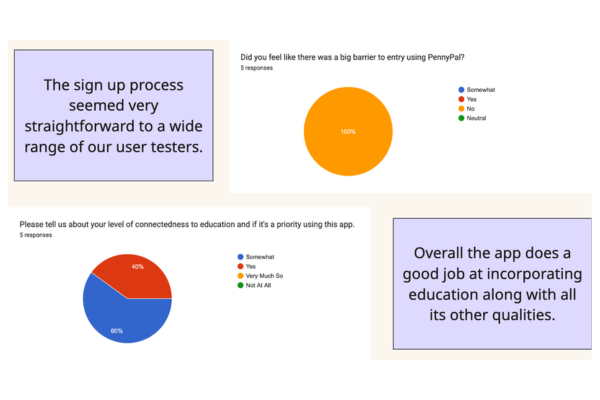
      To develop our insights, data was collected at the end of user testing. Each tester expressed their opinions and thoughts on the app throughout the survey and gave the team rich insights to inform PennyPal’s future development. A few of these insights were:

      • Overall, the app does a good job of incorporating education along with all its other qualities.
      • PennyPal’s core features, including Daily Trivia and Goal Setting, prioritize Gen Z’s key traits and needs.
      • There’s a resounding connectedness to education, but room for improvement on the entertainment side of things.


      These rich insights connect directly back to the Design Sprint questions and long-term goals we established at the beginning of the process.


      Results and Outcomes


      After completing the Design Sprint and having built the PennyPal prototype, which went through user testing with five participants, we learned several things. Users would love it if we refined core features to create a smoother experience. The goal tracking feature was one that multiple participants suggested. Our analysis of the feedback we received also revealed that potential future PennyPal users want more interactive, community-driven features focused on friends-first before they connect with strangers about personal finance. PennyPal is poised to grow with our users throughout their major life transitions and can become a trusted tool to take control of your finances.


      Learnings and Reflection


      The biggest overarching challenges during this Sprint were getting all team members on the same page about work allocation and everyone joining our weekly workshops consistently. By the fourth phase of the Sprint, we were able to adjust our task division and allocation to make the team dynamic smoother and still give key contributors the best opportunity to tap into their strengths to make this Design Sprint as impactful and enjoyable as possible. The most unexpected design insight we learned was the overall desire from users to have a “friend-first” emphasis in features like the chat room, and one of the largest takeaways from working with a team throughout this entire Design Sprint is not underestimate the power of “working together alone” and how putting effort into that can improve the overall phase of a Sprint exponentially.


      Conclusion and Next Steps


      This team of product designers, researchers, and communication strategists learned over seven weeks that the agility and definitive structure of a Design Sprint was exactly what we needed to create a MVP of a financial literacy app targeting Gen Z. Leveraging the Design Sprint framework by Google Ventures, we developed translated ideas into reality through planning, research, teamwork, design, and analysis. Based on the final feedback and key takeaways from external user testing, we have several ideas to implement to refine PennyPal and bring this app to market to transform the lives of users in a unique way that blends education and entertainment to improve anyone’s personal finance literacy.


    3. X is Where The Treasure Lies!

      Image Source: Generated by Copilot


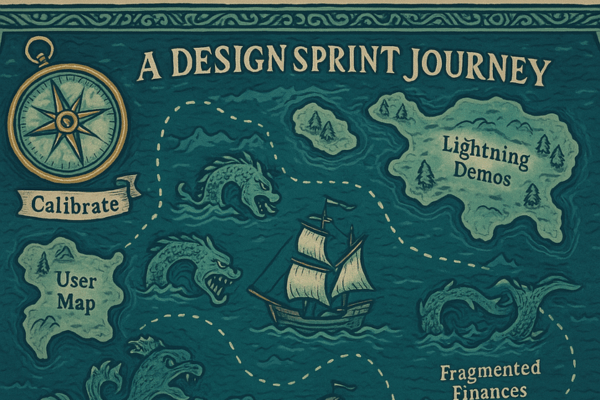
      The Design Sprint is officially underway. Before this journey continues, we must create a plan that outlines where we are headed and what we are trying to achieve. That’s why the first phase of the Design Sprint is Map & Sketch, a dedicated time for our team to calibrate our compass. We will assess the landscape to determine the problems and challenges we might run into building a personal finance education app for young Gen Z adults. This phase also creates the opportunity to chart our course to define aspects of our app, including a user map, visual brand, and run lightning demos to brainstorm. After all of this, we’ll be ready to set sail by selecting the app features we want to explore and creating 4-step sketches.


      Calibrating Our Compass


      A core component of success for this phase is taking time to assess the landscape by getting on the same page with your team about what problems and challenges users face in this industry. Outlining this as a team gave us perspective on what type of Design Sprint questions and long-term goals we’d have to create later. Trust and privacy, and market fit are two of the problems that our team believes act as a barrier to entry or pain point for Gen Z users when using personal finance apps. We also thought that these users typically have short attention spans and high UX expectations and understand they have a fragmented financial life, which will make it difficult to come up with features that can grow with our users through their life transitions.


      One of the most helpful mindset shifts our team had during this phase came from completing the “How Might We?” (HMW) exercise. This was dedicated time together to intentionally shift our perspective from viewing the challenges and problems we identified as pain points to thinking of them as opportunities we can capitalize on for our users. NN/g, a global team of UX experts, wrote five simple tips on how to create good how might we questions.


      1. Start with the problems or insights you’ve uncovered.
      2. Avoid suggesting a solution in your HMW question.
      3. Keep your HMW broad .
      4. Focus your HMW on the desired outcome.
      5. Phrase your HMW questions positively.


      Image Source: NN/g


      Now that we’ve calibrated our compass, it’s time to chart a course before we set sail.


      Charting a Course


      I believe the User Map exercise in this phase will be one of the most influential exercises later in the Design Sprint when it comes to creating our prototype. Similarly to charting a course before setting sail, creating a user map was a way for our team to see a visual and understand how our app users will interact with the app from start to finish. This exercise was valuable because it gave our team an understanding of the key moments we can focus on for the customer journey to determine what app features we want to prioritize. It also gave all of us perspective on the scope of the original problem and the challenges we identified at the beginning of this phase.


      After this, we moved on to lightning demos, a process where you assess the landscape within the personal finance industry and outside of it to source inspiration, spark creativity, and see what does and doesn’t work within various apps and products. This set us up well to organize ideas for app features into the following categories: user experience, safety and account management, and social and gamification. A few apps our team used for this exercise were Fetch, Bilt, Letterboxd, and Discord. It was a great mix of industries outside of personal finance and gave us inspiration for our 4-step sketches from a feature perspective.


      A principal designer at a digital agency based out of Melbourne describes the benefits of lightning demos perfectly in this Medium article they published.

      “The lightning demo is a fun way to ignite creativity, you can do it as a stand-alone exercise with your team. Its purpose is to share ideas, find a muse and spark everyone’s imagination in an efficient and productive manner – just like a good old show and tell sessions we used to have in schools.”


      Image Source: Medium


      Now that we’ve charted our course, our team is ready to set sail and wrap up the final exercise of this first phase of the Design Sprint.


      Setting Sail


      With a calibrated compass and a charted course, our team is ready to take all this prep work and start generating ideas and solutions for our app. The Design Sprint has a specific exercise in this phase that’s structured to do this, and it’s called the 4-step sketch. This exercise has four individual activities: notes, ideas, crazy 8’s, and solution sketching. Our team’s desirable outcome from the 4-step sketch is to have everyone contribute ideas based on the previous lightning demos and research that we conducted.


      Selecting an idea or two from the rapid ideation step in this exercise was tougher than we thought it’d be. Having only 20 minutes to take notes and draw out our ideas wasn’t too overwhelming, but facilitating the Crazy 8s proved quite challenging because we were all forced to work quickly, rely on intuition, and had to sift through an arrangement of diverse ideas.


      The fluidity and less rigid structure of 4-step sketching reminds me of my experience brainstorming content marketing for an annual event at my job. I work for Quinnipiac University’s Development and Advancement office. My role focuses on digital engagement and content marketing for alumni engagement events and annual giving initiatives across the entire university. Every summer, several months before the event, I get together with my peers to plan Bobcat Weekend, Quinnipiac’s annual alumni and families weekend.


      The brainstorming session for Bobcat Weekend has several parallels with the process of 4-step sketching. Everyone “works together alone” by taking time to create notes and ideas on their own, based on past Bobcat Weekends and inspiration from other universities. Before we do this, we also all have a mutual understanding of what our “problems” and “challenges” are heading into this Bobcat Weekend. The outcome? We each have several fleshed-out ideas and concepts for content marketing (social media posts, emails, print materials), and then we reconvene as a group to make decisions (just like designers do in a Design Sprint in the next phase).


      If you don’t want to take my word for it that the 4-step sketch is one of the best ideation exercises to yield you and your team great progress and results, here’s a brief excerpt from an article written by GitLab about how the process worked for them and how Crazy8’s created progress.


      “After thinking about the problem and potential solutions individually, we began solution-sketching through storyboards. This gave us the chance to further develop the details of a solution we chose through the crazy 8s. We started with a blank sheet of paper, placed three sticky notes on the page to represent three frames, and spent twenty minutes sketching more detailed wireframes. In the surrounding white space, we named our storyboard and wrote a brief explanation of the idea in order to ensure that the frame was understandable without verbal explanation. This helped us prepare for the next step, our silent critique.”


      Image Source: GitLab


      I’m excited to move on to the second phase of the Design Sprint to review everyone’s 4-step sketches in the art museums, create and vote on user flows, and begin storyboarding.

    4. How Purposeful Practice Produces Progress

      Image Source: Generated by Copilot


      We have reached a significant turning point in the Design Sprint; it’s time for the ultimate test. Our PennyPal prototype is ready to move through the test and collect phase. This phase of the Design Sprint is an opportunity for our team to determine if PennyPal is a viable app for Gen Z users to learn about personal finance through education and entertainment. The goal of this phase is to ensure we selected the right participants for user testing, created the right types of questions and scenarios, and can analyze the data in an actionable way.


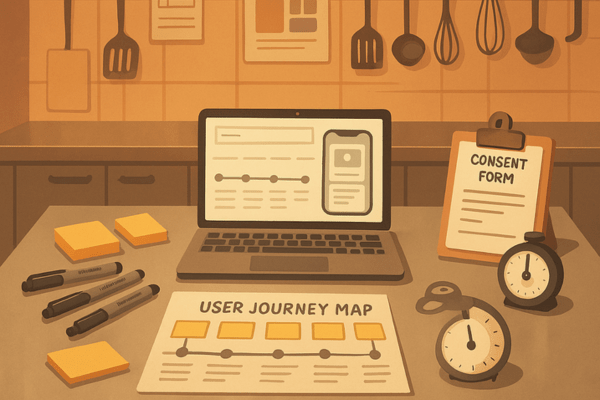
      The test and collect phase of the Design Sprint turned our concept into a reality and required all of us to go from the kitchen to the table by defining the ideal target audience and the ingredients to success, assemble and clearly brief the A-Team, and unpack the truth.


      From the Kitchen to the Table


      The amount of preparation, attention to detail, and speed that is in the kitchen behind closed doors to create that incredible meal and deliver it to a table successfully is not easy. It is the same case when creating a prototype in a Design Sprint and getting it to external user testing. To do this, you need to start by defining your ideal target audience. To define our target audience for PennyPal, we separated the large gamut of our potential Gen Z  users into three buckets: high school students 16-18, college students 18-22, and “early career starters” 22-28. For each of these audiences, we took time to learn their key traits and needs. Doing this led to successfully recruiting five participants, and then, we did what any good restaurant does: we sourced our ingredients for success. We created clear logistics, location, and duration for user testing and shared that with all five of our participants. Doing this eliminated any potential confusion, so they were ready to have a great experience that would give us rich data.


      To get this great meal to the table, aka get the prototype to the participants and begin user testing, we needed to “serve success,” which is making sure our team has created and can facilitate scenarios that reveal insights to define an actionable path forward for the following priorities: PennyPal’s growth, PennyPal’s strategy, PennyPal’s Brand DNA.


      This process reminds me a lot of the first step in the five steps to finding your target audience. According to this article by Adobe, audience targeting starts with a close look at your business’s products or service offerings and there are three steps to get your answer.

      1. Determine what problem your goods or service solve.
      2. Think about who’s most likely to benefit from your product or service solution.
      3. Define your unique selling proposition.


      Image Source: Adobe


      Assembling and Briefing the A-Team


      To set up your participants for successful external user testing, you can’t just put the bat signal out and hope for the best. If we wanted our participants to be the best version of an A-Team they could be, we needed to establish a recruitment plan and brief them on what user testing is. Explaining to our participants the value of user testing and that it’s important because it reveals underlying issues with the app, improves the user experience, and builds empathy helped make this experience enriching for everyone. One of my teammates also did a great job of establishing a recruitment plan by creating a consent form, communicating with participants via succinct emails, and sending out a calendar link to book a time to participate in the user test.


      Sprint: How to Solve Big Problems and Test New Ideas in Just Five Days by Jake Knapp talks about a concept called “The Five-Act Interview.” This is a structured conversation between the facilitator on the Design Sprint team and user testing participants to get comfortable and establish some background. Act 4: Tasks and Nudges, asking the user to do realistic tasks during an interview is the best way to simulate real-world experience. The facilitators on my team for the Design Sprint really leaned into this concept during all five of our user tests to create this atmosphere.


      Reflecting on the value of user testing also helped me realize that it really is priceless in the end. Many companies try to skip corners and take shortcuts by de-prioritizing user testing due to time, budget, or resource constraints. But skipping it altogether would be a massive shortcoming. If you don’t want to take my word for it, a research blog written by a revered prototyping app company named Marvel put it perfectly. “It’s a great chance to get to know your users. Learn who they are, what they want and why they need this product. How do they need it to function? How will it fit in to their day to day lives?”


      Image Source: Marvel


      Unpacking the Truth


      After we completed the external user testing with all five participants and they all finished a post-test survey we provided, we were left with rich data to dive into. Post-test survey questions revealed to our team great insights such as:


      • Overall, the app does a good job of incorporating education along with all its other qualities.
      • PennyPal’s core features prioritized Gen Z’s key traits and needs, with features like Daily Trivia and Goal Setting.
      • There’s a resounding connectedness to education, but room for improvement on the entertainment side of things.


      These rich insights connect directly back to the Design Sprint questions and long-term goals we established at the beginning of the process. Questions like, “Do our gamification features drive repeated engagement? And long-term goals, such as enabling users to set and achieve personalized financial goals.


      Identifying patterns and themes to connect these insights to decisions we can make about PennyPal, reminds me a lot of the reflection process we do at my job after one of our annual campaigns. I work with a team of development professionals at Quinnipiac University’s Development and Advancement office. My role is specifically focused on digital engagement (social media, email marketing, event registration webpage building). A team of eight people including myself held a retrospective after one of our annual fundraising campaigns and I brought to the group a few slides identifying a pattern of looking at our emails year-over-year and seeing how we changed the send address to use personal names instead of a general email alias, and the emails using personal names performed significantly better. This occurrence was me identifying a pattern to connect an insight for our group to react to and make a decision.


      This final stage of the test and collect phase of the Design Sprint reinforces why you should conduct a sprint early in the lifespan of your business or product launch. I came across an article by Fast Company that expands on this idea and explains the reasoning further in a very comprehensible way.

      “The ROI of customer research is greatest when the risk and cost of building the wrong product are high. But even when it’s easy to build an MVP to launch and learn, sunk cost fallacy can undermine a team’s objectivity and willingness to scrap their work. Why risk making a bad first impression when it’s easy to find and fix problems before launch?”


      Getting stakeholders to understand the truth behind this statement could make or break your Design Sprint.

      Image Source: Fast Company


      I’m looking forward to packaging all the work my team and I did over the last seven weeks to present the impact of a Design Sprint in a professional, understandable, and actionable way.

    5. Walk Before You Sprint: The Overlooked Phase That Makes or Breaks Your Design Sprint

      Image Source: Generated by Google Gemini


      Where it all Started


      Before you and your team begin a Design Sprint, you need to take the necessary measures to make sure everyone is ready. With Design Sprints, there’s no such thing as overpreparation. Connecting with your team and client to onboard each person, define who is doing what, review the “run-of-show,” double check you have all the materials you need, and create several team agreements that are honored through the Sprint will guarantee its overall success.

      Let’s delve into a few of the steps I mentioned above to better understand the role each of these play in the preparation phase of the Sprint and how you and your teammates can contribute to each these tasks to get on the same page before beginning the Sprint itself!


      A Goal Without a Plan is a Wish


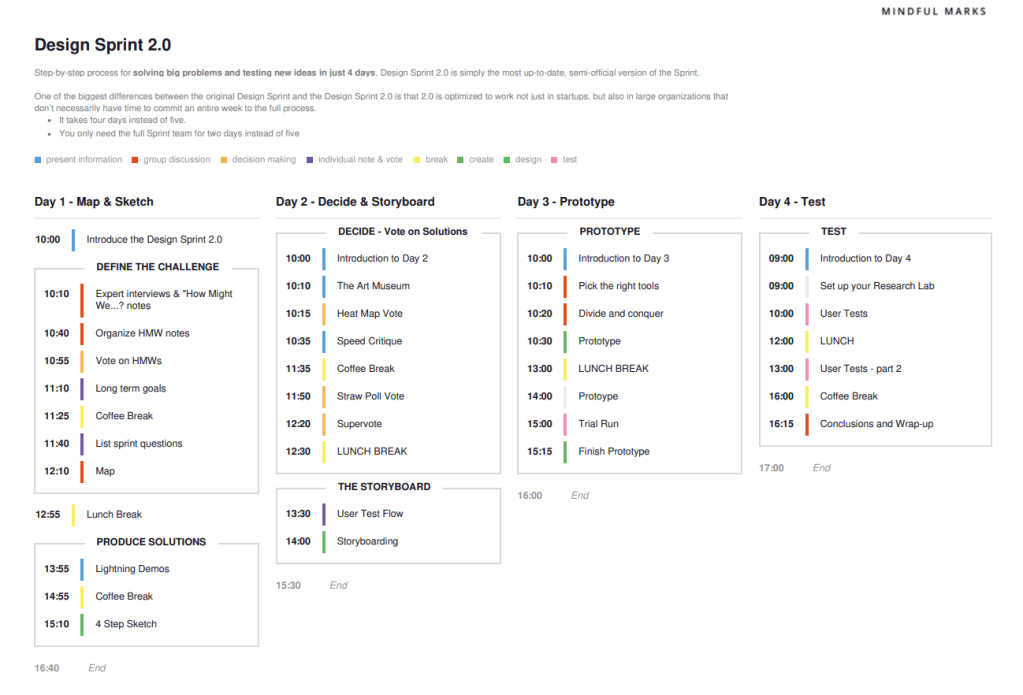
      If you want to achieve a certain outcome, you need to have an idea as to what your specific “challenge” is, and understand what and who it is going to take to solve it. With the Sprint process, you and your team use guard rails that serve as ground rules over the course of four days. Each day has several mini workshop sessions and the day itself has a theme, or an even better way to think about it is each day is broken out by one of the steps of the Design Thinking process. See the picture below to better understand what I am talking about.

      Image Source: Mindful Marks


      Why a Craftsman Needs to Sharpen Their Tools


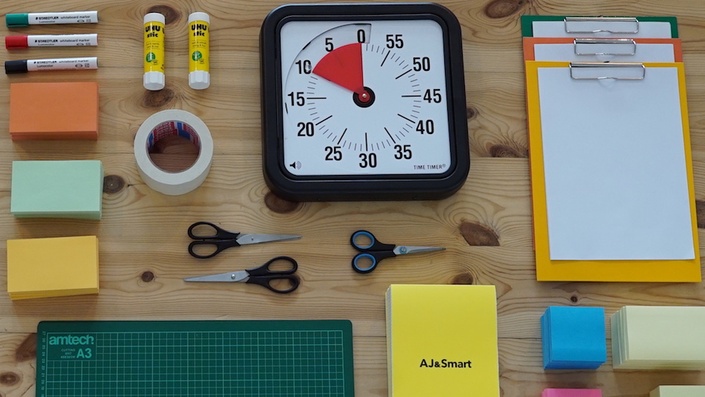
      Before you, your team, and client begin the first day of the Sprint, make sure you have all the supplies all of you will need for the next four to five days. If you are running the sprint virtually and everyone is remote, you can rely on tools like Miro for digital whiteboarding, otter.ai to transcribe notes from each day of the workshop, and Zoom to host the meetings virtually and record all of them. If you are doing the workshop in-person instead, you’ll need to have lots of office supplies to whiteboard and brainstorm in-person including but not limited to stickie notes, sharpies/markers, masking tape, and time (to name a few).

      Image Source: AJ & Smart


      Roles & Responsibilities: Everyone Has One


      I’m sure you’ve heard the phrase teamwork, makes the dream work. As cliché as it may be, this is especially true when you’re working with a group to facilitate a sprint. Everyone’s role and the responsibilities that come with it need to be decided ahead of time for the Sprint to run smoothly. As explained in the Sprint Handbook: a step-by-step guide to planning and running innovation sprints, each of these roles play a unique and critical part in the success of a Sprint. See below for just a few!

      • Notetaker:  Captures essential information during interviews and discussions.
      • Lead Facilitator: Guides the overall direction and maintains focus of the sprint.
      • Sprint Host: Ensures a comfortable and productive environment for everyone.
      • Prototyper: Translates ideas into tangible prototypes.
      • Interviewer: Conducts user interviews to gain insights.


      Image Source: Workshopper


      There’s No “I” in Team: How to Compromise


      The most impactful concept I learned in this stage of Design Sprints is the importance of creating Team Agreements. During the mini workshop we conducted this week as a team, this was one of the three exercises we had to complete together. Doing this collaboratively, enabled each one of us to learn more about what each person in the group enjoys about teamwork, what they find challenging, and then create several agreements that we can all use to bring clarity, focus and good vibes for the next 6 weeks of work we will do together. Here’s a few of the agreements we made.


      Team Agreements

      1). Be on time to our weekly Friday meetings starting at 1 p.m. ET and let the group know by Wednesday if you can’t make it due to an extenuating circumstance.

      2). Keep phone on silent and/or do not disturb during our team meetings.

      3). Dedicate the first five minutes of the team meeting to “catching-up.”

      It’s not possible to over prepare for a Sprint Workshop. Preparing for a sprint Workshop is just like walking to warm up before running a race. Walking before running is often overlooked and an afterthought, but without it you’re ten times more likely to cramp up or maybe even pull a muscle. Metaphorically speaking, the same goes for preparing for a Sprint. Without all these layers of preparation you, your team, and client aren’t going to have a successful sprint. After preparation is complete, it’s time to move into the first phase of the sprint. Map + Sketch.

      Sources

      Belle Hastings, P. (n.d.). The Sprint Handbook: a step-by-step guide to planning and running innovation sprints.

      Knapp, J., Zeratsky, J., & Kowitz, B. (2016). Sprint: How to solve big problems and test new ideas in just five days. Bantam Press.

    6. The Infinite Iterative Loop

      Image Source: Generated by Google Gemini


      When it comes to problem-solving, regardless of the issue, you must think creatively to come up with a solution. Usually, your first step is to get a grasp of the situation. After that, you move on to creating a hypothesis. Once you’ve created a hypothesis, you start generating ideas. Next, you develop a demo of what you are trying to produce, and lastly, you release a version out into the world for a set audience to test and utilize.

      These steps I just listed are the core components of Design Thinking, a type of problem-solving that focuses on human-first design using an iterative process. To better understand Design Thinking, we are going to look at its origins, examine the guiding principles of the sprint process, and uncover what types of problems sprints are great at solving.


      Where it all Started


      The roots of Design Thinking go back to the 1960s. What started as a novel concept grew into a widely embraced strategy that could not stop accelerating. Design Thinking became mainstream and solidified as an approach to innovation in the late 20th century. Several people and institutions played a role in its mass adoption. David Kelley, the founder of IDEO, a global design company, is credited for shaping and promoting the version of Design Thinking that millions of people use today.

      This new movement sought to redefine the design process, including how interdisciplinary creatives collaborated, the emphasis on empathy, and shifted focus on iterative problem-solving. After Design Thinking had proven its value through popularization and widespread usage, companies and individuals at the cutting edge of technology and innovation created the “Sprint.”


      This Time it’s a Sprint, not a Marathon


      One of the biggest byproducts of Design Thinking is the Sprint, a method that solves problems quickly and validates ideas in a compressed timeline of five days instead of several months. A Sprint is comprised of four guiding principles.

      • Working Together Alone: Sketch, ideate, and create on your own, then come back together.
      • Tangible Things Over Discussion: Focus on discerning, deciding, and getting ideas into the world as tests.
      • Getting Started Over Being Right: Embrace ambiguity. Become risk-tolerant.
      • Don’t Rely on Creativity: Leverage time-based exercises that use frameworks to ideate and create.


      When at a Crossroad, Which Path to Take


      When it comes to developing innovation and solving problems, many companies struggle with deciding when to run a Sprint or if it’s even worth doing so from a timing and resources perspective. The best thing to do, is remind yourself that running a Sprint allows you and your team to test ideas and learn quickly while minimizing the risk.

      Here are a few examples of when it’s best to run a Sprint!

      1. When starting a new project.
      2. When seeking to improve an existing product or process.
      3. When seeking user validation.
      4. When fostering collaboration and team alignment.


      Design Thinking and the facilitation of a Sprint are iterative processes that are infinite, just like a loop. Even after you launch your product to market, even if you solved the original problem that was defined, it’s more likely than not you’ll have a new problem to solve or a specific thing your users want to see improved. Starting the Design Thinking and Sprint process all over again.


      Sources

      Belle Hastings, P. (n.d.). The Sprint Handbook: a step-by-step guide to planning and running innovation sprints.

      Knapp, J., Zeratsky, J., & Kowitz, B. (2016). Sprint: How to solve big problems and test new ideas in just five days. Bantam Press.

    7. New Haven Pickleball’s Brand Promise: More Than Just a Game

      Image Source: Photograph taken by Steve Walter

      At its core, all brands are a promise. Usually, the first thing that people picture when they hear the word “brand” is a logo, colors and some type of slogan. Gathering all these components together to tell people a story and effectively communicate whatever good or service you are selling is how you succeed in creating a successful brand that changes someone’s life. Taking this visual design course taught me to think about branding holistically from the perspective of a designer. Specifically, how every little decision whether it’s using a chunky serif font to evoke an assertive tone, choosing a balanced trio of colors, or creating a certain style of illustration on product packaging to target an audience; all these decisions add up to the total sum of what makes a brand memorable.  

      The culmination of these design skills I learned over the last seven weeks is on display in the new brand guidelines I designed for New Haven Pickleball. This is a community to connect with local, fellow pickle-ballers. No matter if you are brand new to this brilliant game or prepping for the day it is in the Olympics, you are welcome! I discovered this community in the summer of 2024 and almost one year later, have met many incredible people that I play Pickleball with regularly. Creating brand guidelines for New Haven Pickleball was a fun, yet challenging process since the brand had no foundation to work off besides a name and a few social media pages. I’m going to take you through an aspect of the brand guidelines that is one of the most vital components to making this brand what it is.
      Verbal Brand

      Regardless of the company or organization, the anatomy of all brands has a verbal brand component. For New Haven Pickleball, all it had was name. When you really think about it, a verbal brand is so much more than a name, it’s your company’s slogan, personality, tone of voice, and style of language.

      After reading a chapter on branding from the book “Graphic Design For Everyone” by Cath Caldwell, I understood what all of these parts of a verbal brand meant. After thinking, research, and some trial and error, I decided to change the name of this company to NHV PB, created the slogan “Community > Competition”, and established its values are inclusivity, positivity, learning and passion.

      These decisions about NHV PB’s verbal brand set the tone moving forward for the copy I used on marketing collateral including an event poster, brochure about the spring league, and a home page design comp for a website mockup.

      The slogan, “Community > Competition” might be the most important aspect of NHV PB’s verbal brand. This company is mainly a community. The “good” it sells is the sense of belongingness, camaraderie, and the opportunity to consistency play pickleball. Using this phrase as a slogan that appears on print collateral, merchandise, and digital properties echoes inclusivity as a brand value and welcomes players at all levels while still validating the legitimacy and opportunity to progress and get better at pickleball.

      I look forward to learning more about visual design and the opportunity to potentially work with the league manager who created New Haven Pickleball to implement some of these brand guidelines.


      Sources

      Caldwell, C., & Skene, R. (2019). Graphic design for everyone: Understand the building blocks so you can do it yourself. Dorling Kindersley Limited.

    8. Evoking Emotions Through Writing: Why Typography is Branding’s Unsung Hero

      Image Source: Canva Dream Labs AI Generator

      Every day, the average person reads about a dozen different typefaces. Whether it’s a billboard for a new business that opened in your neighborhood, the recipe for a meal in a cookbook, or a television broadcast of your baseball team. Typography is one of the most powerful tools to convey emotion. Although it’s something most people seldomly think about in terms of understanding its core components and how to use it to convey specific moods, it is one of the most powerful tools a designer can have in their arsenal.

      After thinking about this week’s readings, videos, and assignments, I’m going to delve into the anatomy of type, explaining how several core components make up a typeface and ultimately the mood it conveys.

      Every Major Cog in the Machine

      After reading the first section of chapter 2: building blocks in the book, “Graphic Design for Everyone” it started to click for me. Just like the technology we have that uses lots of parts to make a device work, Typography has a nuanced anatomy with various components that make up its structure to create different typefaces. I’m going to teach you about three different components that make up the structure of a Typeface for you to better understand how designers can manipulate these things to create different typefaces.

      Ascenders

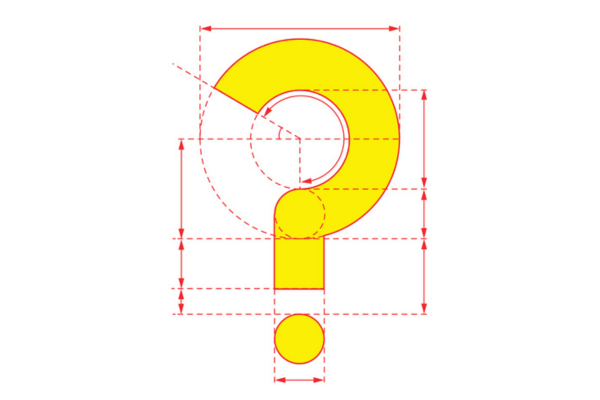
      The first component I want to examine is the ascender. An ascender is the part of the lowercase letter that extends above the x-height (the height of a font’s lowercase x). If a designer selects a font with high ascenders, it’s usually because they want a letter to be easily distinguishable. You’ll see this often with book titles, such as the example pictured below which would be used as a font for a fantasy book.

      Image Source: Creatype Studio

      Bowls

      The next component we’re going to look at is a bowl. This is the curved stroke that creates an enclosed space. This is a significant element of type design because the size, curvature, and proportions of the bowl can vary significantly depending on what typeface you’re using. A great juxtaposition to look at to better understand the bowl, is comparing the letters R and B and this article titled Typography design 101: a guide to rules and terms” explains it perfectly.

      “The letters B, P and R are sister shapes, one being derived from the other. However, that doesn’t mean they have the same proportions. The bowl of the R needs to be slightly thinner so that when we connect the leg to it, it won’t become super thick. While the upper bowl of the B needs to be smaller than the bottom one, so that the letter appears more stable.”

      Image Source: 99Designs

      Serifs

      One of the most prevalent components in all typefaces is the presence or absence of a serif, a small, decorative extension at the ends of some strokes. This component defines whether a typeface is a serif type, or sans serif type. Serif types have this decorative extension and sans serif types do not. When you compare the two next to each other you can immediately tell a different mood is set. Serif typefaces typically look authoritative, professional and serious. Sans serif typefaces are usually quirky, whimsical and fun. Choosing these your typeface wisely based on your brand’s essence and expression can make or break your brand in terms of how it resonates with your intended target audience.  


      Although typography is the unsung hero when it comes to what the average person thinks of when they hear the word branding, understanding it and mastering it is one of the most useful skills a designer can build.

    9. The Anatomy of Brand DNA

      The Anatomy of Brand DNA

      Staring at a blank canvas is overwhelming. Usually, we have an idea but taking a concept and turning it into reality to “get started” is where we have the most difficulty.

      This week, I learned about the different components of understanding your brand and why spending countless hours planning and researching will save you agita in the long run during the design phase.  Two concepts stood out to me the most and I want to emphasize why I think each of them is equally important in the world of branding.


      Brand Expression

      When it comes down to creating a brand plan there are four main stages in this process. Understanding the difference between creating your verbal brand and visual brand is paramount.

      When defining your verbal brand, you need to answer questions like:

      • What’s your brand’s summary line descriptor?
      • If you would describe your brand like a person with personality traits, how would you describe your brand?
      • If your brand were a person, how would it speak?

      Going through this consideration set with the New Haven Pickleball League, a small organization I am re-branding, I was able to establish the fact its tone of voice is chatty and informative, its values are inclusivity, positivity, an always learning mindset and passion, and its summary line is “Community over Competition.”

      Completing this exercise gets you one step closer to defining who your brand is and what audiences you want to connect with. After this, you can start to address the other side of the coin, visuals.


      Brand Essence

      Creating a visual language to convey the identity of your organization is a meticulous process. Collecting colors, images, and typefaces to make a mood board helped me organize my thoughts and start to think through what is central to the branding of the New Haven Pickleball League and figure out what’s that common thread that holds it all together.

      Selecting visuals that connect to your verbal brand and convey the words you chose that represent your brand is how you move forward in the design process to the fourth and final stage, development.

      Adaptable Aesthetics was at the top of mind while I was creating several versions of my logo. I used a combined mark with typography that conveys motion and unity (two constants in the world of Pickleball for all players). I also prioritized simplicity for my logo to work well in any context (business cards, water bottles, backpacks, apparel, etc.).

      Learning about the juxtaposition of a brand’s expression (verbal Language and positioning) and essence (visual language) has taught me how to use brand and design terminology, conduct research, and design brand components.

      An important distinction I took away from everything I’ve read and created this past week is that a logo is not a brand. It’s a unique design or symbol that represents an organization. A brand distills the nature of the experiences that consumers have when they come in contact with your business.

      I’m looking forward to delving deeper into typography over the next week and learning how it influences branding and visual design.