Tag: branding

  • New Haven Pickleball’s Brand Promise: More Than Just a Game

    Image Source: Photograph taken by Steve Walter

    At its core, all brands are a promise. Usually, the first thing that people picture when they hear the word “brand” is a logo, colors and some type of slogan. Gathering all these components together to tell people a story and effectively communicate whatever good or service you are selling is how you succeed in creating a successful brand that changes someone’s life. Taking this visual design course taught me to think about branding holistically from the perspective of a designer. Specifically, how every little decision whether it’s using a chunky serif font to evoke an assertive tone, choosing a balanced trio of colors, or creating a certain style of illustration on product packaging to target an audience; all these decisions add up to the total sum of what makes a brand memorable.  

    The culmination of these design skills I learned over the last seven weeks is on display in the new brand guidelines I designed for New Haven Pickleball. This is a community to connect with local, fellow pickle-ballers. No matter if you are brand new to this brilliant game or prepping for the day it is in the Olympics, you are welcome! I discovered this community in the summer of 2024 and almost one year later, have met many incredible people that I play Pickleball with regularly. Creating brand guidelines for New Haven Pickleball was a fun, yet challenging process since the brand had no foundation to work off besides a name and a few social media pages. I’m going to take you through an aspect of the brand guidelines that is one of the most vital components to making this brand what it is.

    Verbal Brand

    Regardless of the company or organization, the anatomy of all brands has a verbal brand component. For New Haven Pickleball, all it had was name. When you really think about it, a verbal brand is so much more than a name, it’s your company’s slogan, personality, tone of voice, and style of language.

    After reading a chapter on branding from the book “Graphic Design For Everyone” by Cath Caldwell, I understood what all of these parts of a verbal brand meant. After thinking, research, and some trial and error, I decided to change the name of this company to NHV PB, created the slogan “Community > Competition”, and established its values are inclusivity, positivity, learning and passion.

    These decisions about NHV PB’s verbal brand set the tone moving forward for the copy I used on marketing collateral including an event poster, brochure about the spring league, and a home page design comp for a website mockup.

    The slogan, “Community > Competition” might be the most important aspect of NHV PB’s verbal brand. This company is mainly a community. The “good” it sells is the sense of belongingness, camaraderie, and the opportunity to consistency play pickleball. Using this phrase as a slogan that appears on print collateral, merchandise, and digital properties echoes inclusivity as a brand value and welcomes players at all levels while still validating the legitimacy and opportunity to progress and get better at pickleball.

    I look forward to learning more about visual design and the opportunity to potentially work with the league manager who created New Haven Pickleball to implement some of these brand guidelines.


    Sources

    Caldwell, C., & Skene, R. (2019). Graphic design for everyone: Understand the building blocks so you can do it yourself. Dorling Kindersley Limited.
  • Evoking Emotions Through Writing: Why Typography is Branding’s Unsung Hero

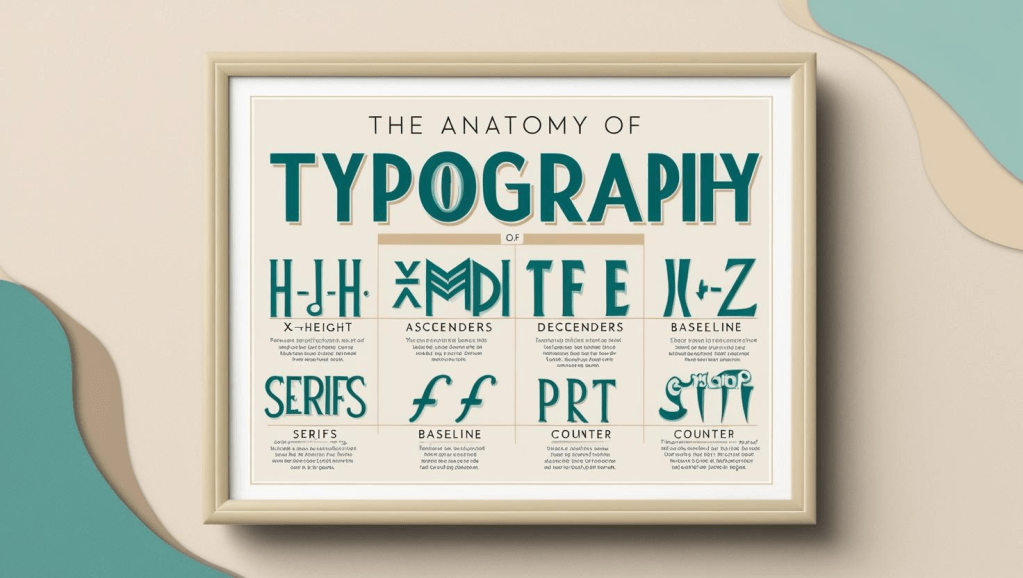
    Image Source: Canva Dream Labs AI Generator

    Every day, the average person reads about a dozen different typefaces. Whether it’s a billboard for a new business that opened in your neighborhood, the recipe for a meal in a cookbook, or a television broadcast of your baseball team. Typography is one of the most powerful tools to convey emotion. Although it’s something most people seldomly think about in terms of understanding its core components and how to use it to convey specific moods, it is one of the most powerful tools a designer can have in their arsenal.

    After thinking about this week’s readings, videos, and assignments, I’m going to delve into the anatomy of type, explaining how several core components make up a typeface and ultimately the mood it conveys.

    Every Major Cog in the Machine

    After reading the first section of chapter 2: building blocks in the book, “Graphic Design for Everyone” it started to click for me. Just like the technology we have that uses lots of parts to make a device work, Typography has a nuanced anatomy with various components that make up its structure to create different typefaces. I’m going to teach you about three different components that make up the structure of a Typeface for you to better understand how designers can manipulate these things to create different typefaces.

    Ascenders

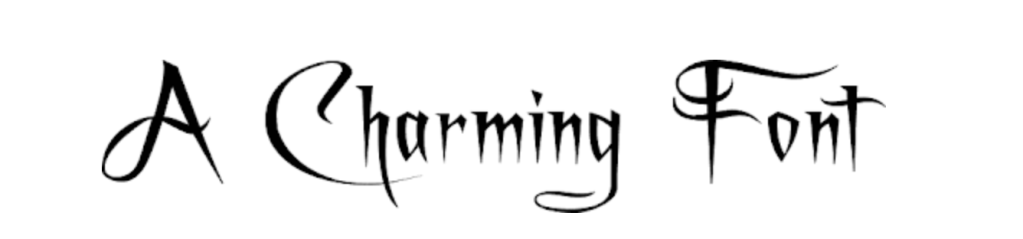
    The first component I want to examine is the ascender. An ascender is the part of the lowercase letter that extends above the x-height (the height of a font’s lowercase x). If a designer selects a font with high ascenders, it’s usually because they want a letter to be easily distinguishable. You’ll see this often with book titles, such as the example pictured below which would be used as a font for a fantasy book.

    Image Source: Creatype Studio

    Bowls

    The next component we’re going to look at is a bowl. This is the curved stroke that creates an enclosed space. This is a significant element of type design because the size, curvature, and proportions of the bowl can vary significantly depending on what typeface you’re using. A great juxtaposition to look at to better understand the bowl, is comparing the letters R and B and this article titled Typography design 101: a guide to rules and terms” explains it perfectly.

    “The letters B, P and R are sister shapes, one being derived from the other. However, that doesn’t mean they have the same proportions. The bowl of the R needs to be slightly thinner so that when we connect the leg to it, it won’t become super thick. While the upper bowl of the B needs to be smaller than the bottom one, so that the letter appears more stable.”

    Image Source: 99Designs

    Serifs

    One of the most prevalent components in all typefaces is the presence or absence of a serif, a small, decorative extension at the ends of some strokes. This component defines whether a typeface is a serif type, or sans serif type. Serif types have this decorative extension and sans serif types do not. When you compare the two next to each other you can immediately tell a different mood is set. Serif typefaces typically look authoritative, professional and serious. Sans serif typefaces are usually quirky, whimsical and fun. Choosing these your typeface wisely based on your brand’s essence and expression can make or break your brand in terms of how it resonates with your intended target audience.  


    Although typography is the unsung hero when it comes to what the average person thinks of when they hear the word branding, understanding it and mastering it is one of the most useful skills a designer can build.

  • The Anatomy of Brand DNA

    The Anatomy of Brand DNA

    Staring at a blank canvas is overwhelming. Usually, we have an idea but taking a concept and turning it into reality to “get started” is where we have the most difficulty.

    This week, I learned about the different components of understanding your brand and why spending countless hours planning and researching will save you agita in the long run during the design phase.  Two concepts stood out to me the most and I want to emphasize why I think each of them is equally important in the world of branding.


    Brand Expression

    When it comes down to creating a brand plan there are four main stages in this process. Understanding the difference between creating your verbal brand and visual brand is paramount.

    When defining your verbal brand, you need to answer questions like:

    • What’s your brand’s summary line descriptor?
    • If you would describe your brand like a person with personality traits, how would you describe your brand?
    • If your brand were a person, how would it speak?

    Going through this consideration set with the New Haven Pickleball League, a small organization I am re-branding, I was able to establish the fact its tone of voice is chatty and informative, its values are inclusivity, positivity, an always learning mindset and passion, and its summary line is “Community over Competition.”

    Completing this exercise gets you one step closer to defining who your brand is and what audiences you want to connect with. After this, you can start to address the other side of the coin, visuals.


    Brand Essence

    Creating a visual language to convey the identity of your organization is a meticulous process. Collecting colors, images, and typefaces to make a mood board helped me organize my thoughts and start to think through what is central to the branding of the New Haven Pickleball League and figure out what’s that common thread that holds it all together.

    Selecting visuals that connect to your verbal brand and convey the words you chose that represent your brand is how you move forward in the design process to the fourth and final stage, development.

    Adaptable Aesthetics was at the top of mind while I was creating several versions of my logo. I used a combined mark with typography that conveys motion and unity (two constants in the world of Pickleball for all players). I also prioritized simplicity for my logo to work well in any context (business cards, water bottles, backpacks, apparel, etc.).

    Learning about the juxtaposition of a brand’s expression (verbal Language and positioning) and essence (visual language) has taught me how to use brand and design terminology, conduct research, and design brand components.

    An important distinction I took away from everything I’ve read and created this past week is that a logo is not a brand. It’s a unique design or symbol that represents an organization. A brand distills the nature of the experiences that consumers have when they come in contact with your business.

    I’m looking forward to delving deeper into typography over the next week and learning how it influences branding and visual design.