Category: Motion Design

  • Ideas Are Worth Nothing Without Execution

    Ideas Are Worth Nothing Without Execution

    The beauty of Motion Design and Animation? It’s a limitless medium that uses structures to turn visual elements into a cohesive story that creates an emotional impact. Defining a consistent theme and taking time with the storyboard process are two of the most foolproof ways to create a memorable animated story.

    Animated Storytelling by Liz Blazer taught me how to plan out “beats,” moments, or active steps in your story that move the plot forward. Blazer also does an excellent job of breaking down the differences between linear and non-linear story structures and offers storytellers four different types of non-linear structures to use: Book Ending, The Countdown, The Puzzle, and The Beaded Necklace. Understanding all this helped me immensely with storyboarding for a personal animated introduction video I created.

    After I was confident with my storyboard and curation of audio and visual files, I followed Blazer’s advice by creating an animatic, a video version of my storyboard laid out in sequence on a timeline in After Effects with a soundtrack aligned to the video.

    Learning about specific aspects of storytelling and storyboarding enabled me to transform an idea into an executed animated video with a clear beginning, middle, and ending.


    Research


    IKEA, Together


    This video captures the limitless possibilities of customization and the beauty of “DIY,” something IKEA became globally recognized for. The transitions from room to room with bright colors are inclusive, and the upbeat pop song spliced together with tasteful, high-pitched sounds of fingers snapping to signal transitions is catchy. This motion graphics video makes the viewer want to visit the closest IKEA store to get lost in possibilities and dream up the next room to create in their home.

    Introducing Google Vids:


    This piece by Google is energetic, imaginative, and creates a perception for viewers that they can create anything. Between its pretty liquid glass search bars, cozy keyboarding typing noises, and captivating floating icons, you watch this video, enamored by the “shiny” possibilities of AI technology.

    Porsche Holiday | The Coded Love Letter


    We are in the middle of the next digital renaissance with the advent of AI. As a result of this new era, imagery and videos are all starting to look eerily similar, and there’s a resistance to this technology. The iconic car manufacturer, Porsche, went against the grain by creating this hand-drawn animated commercial for the 2025 holidays called “The Coded Love Letter.”  Its focus on Porsche’s design and history with hidden easter eggs, including the first license plate number of a Porsche, the tractor created by the founder, and the iconic race car, the pink pig, captured the brand’s human spirit.


    Create

    Meet Kyle Adams! Personal Intro Animation Video


    For this project, I created an animated introduction using the programs Audacity and After Effects! I started with storyboarding to create a clear structure of what this video would dive into. I knew I needed several scenes to introduce myself, briefly explain what I do for work, showcase a hobby or two, and highlight what I am striving to learn.

    After I created six storyboards and decided what type of media each scene would have (pictures, videos, or b-roll photography/footage), I moved on to Audacity. I wrote my script in a Word document, practiced two takes, and then nailed a final take where I said exactly what I wanted to. I edited the wave audio file slightly in Audacity to bump up the gain of the volume levels to land in a range of -12 through -6 to get as close as possible to maxing my narration out without distorting it.

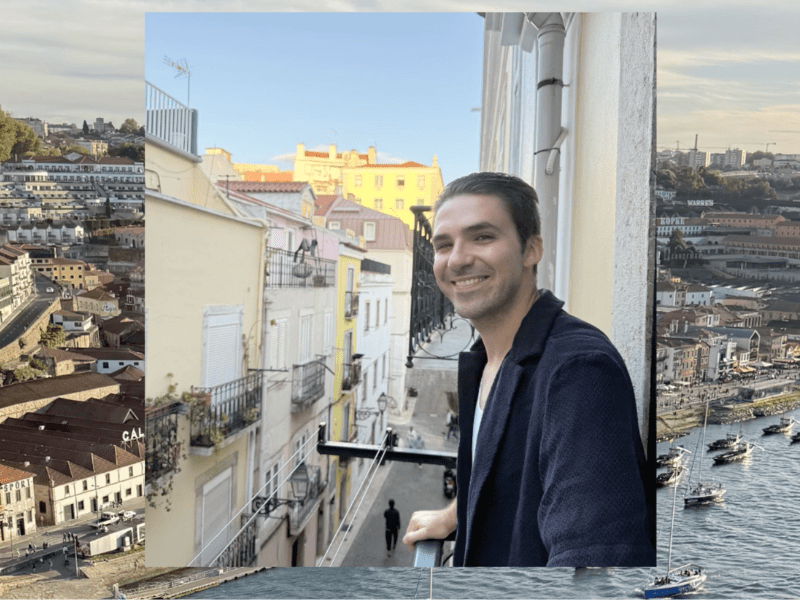
    After I curated all of my audio files (narration and music), images, and videos, I brought them into After Effects to create the animated intro! For the first scene introducing me, because I was using two photos from a vacation I took to Portugal, I wanted my introduction text to animate in a way that complemented a cinematic and travel-documentary vibe. I landed on using a Playfair Display font that evokes an elegant, modern, editorial energy, and created a directional mask reveal to animate the text.

    Adding transitions to fade in and out for various audio tracks and the song I chose for this video, as well as keyframing different scenes to tie the whole video together, was quite challenging, but very rewarding! I’m excited to continue learning about Motion Design.

    Works Cited


    Blazer, Liz. Animated Storytelling: Simple Steps for Creating Animation & Motion Graphics. Peachpit Press, 2020.
  • Sips, Sounds, & Storytelling

    Sips, Sounds, & Storytelling

    The idea of sitting in silence scares most people. Until sound or music is taken away from a piece of art of setting, you don’t realize how big its impact really is. Sound is a medium that transforms ideas into immersive worlds. It elevates concepts into unforgettable stories. Animators and filmmakers can take the sound of heavy footsteps paired with a high-pitched violin to create the sense of fear or use laughter and a soft whispering voice to create the feeling of comfort. The addition of intentional sound effects and music in animation is what separates masterful from mediocre projects.

    Animated Storytelling by Liz Blazer puts into perspective how important sound is to animation. “The notion of sound is that it’s reactive, almost obedient, to action. All sounds are the result of objects vibrating. Sound alone can propel a story forward.” Blazer goes on to define the difference between diegetic and non-diegetic sounds. Diegetic comes from sources visible on the screen that come from the physical world. In my stop motion animation project, I added sounds of coffee grinding, coffee pouring into a cup, and a skateboard pushing away. All these sounds matched the visuals viewers were seeing on screen and added to the immersion of my story. Non-Diegetic sounds come from sources that are neither visible on screen nor have been implied to be present in the action. This includes sound effects that are not natural to objects in the scene. I added a lo-fi jazz soundtrack to my stop motion animation because this non-diegetic sound enhanced the cozy mood a café wants to emulate.

    The collection of examples below showcases how powerful and effective audio and text animation are when it comes to creating masterful projects, and as Liz Blazer says, designing “wonderland.”


    Research


    Spirited Away (Audio)


    This film by legendary director Hayao Miyazaki is one of my favorites for its world-building, immersion, and reflection on some of life’s biggest questions and conflicts. Spirited Away really leans on atmospheric soundscapes like windy weather, distant chatter in a busy marketplace, eerie footsteps, and lots of other diegetic sounds to make viewers feel certain emotions at specific points in the movie. The music does an excellent job of progressing the story and seamlessly shifts from tender, heated exchanges to surreal, peaceful moments. Lastly, it’s quite impressive that Miyazaki and his sound engineer traveled to hot springs in the real world to record authentic bathhouse noises for sound effects, including water movement, steam, and bubbles. See below for a great analysis of how sound enhances storytelling!

    Severance (Audio)


    One of my favorite television series, Severance, a dystopian sci-fi thriller about workers who undergo a procedure to separate their work life from their personal life, is a masterclass in using sound. Through both seasons of the show, ambient sound was used to build an unsettling corporate world with long, windy echoing hallways, low mechanical ambience humming in the background, and keyboard clicks as Lumon workers completed their tasks in macrodata refinement. A core concept of the show that was driven by sound was the characters shifting from their “innie” to “outtie” every time they went up and down the elevator leading to their workplace at Lumon. As a worker goes down the elevator, a g note on the keyboard plays to indicate the shift has started, then a lower tone plays once the transition is complete. This convention is used throughout the show and is used to drive the plot (don’t watch the video linked below if you don’t want any spoilers).

    Napoleon Dynamite (Text Animation)


    One of the most iconic indie comedy movies that is considered a cult-classic is Napoleon Dynamite, the story of a goofy, awkward teenager living in rural Idaho. Often overlooked, the title sequence of this movie sets the tone and is quite unique, turning everyday objects into animated typography. The title sequence uses a myriad of simple meals arranged on colored plates using sauces to spell out phrases. For example, a burrito and rice sit on a plate with mustard spelling out “and Paramount Pictures Present.” These hand-crafted title cards, created from items that are essential to the film’s setting, immediately establish a quirky tone and offbeat personality, which is central to this film. See it for yourself through the video below!


    Catch Me If You Can (Text Animation)


    A top-tier example of effective text animation is the title sequence from Steven Spielberg’s movie, Catch Me If You Can. The silhouette animation, combined with smooth motion that’s also paired with text that moves in a playful, narrative-driven way, is why this is impeccable. The theme of deception and pursuit is quietly introduced here through visual rhythm. I highly recommend watching the video below to see what I mean! As well as the movie, if you haven’t seen it.


    Create

    Smiski Café: Grand Opening Stop Motion Animation Video


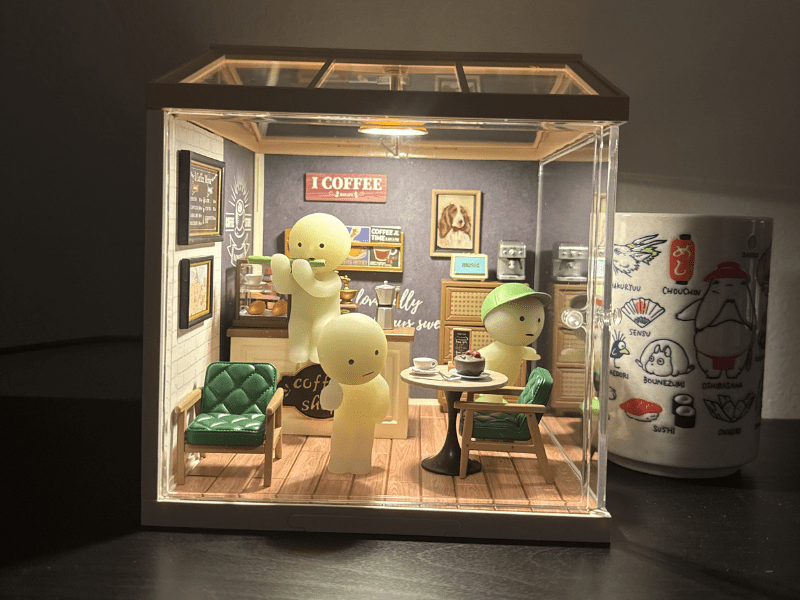
    Week four was a continuation of the foundational pre-production work done last week. It was time to create a stop motion animation video! I decided to choose my linear idea, “A Day in the Life at the Smiski Café.” I rented a tripod and lighting from Quinnipiac, set up my scene, changed my phone settings to shoot in the correct format, and created an audio command via Siri to take pictures hands-free.

    This was challenging! Because I knew my project would be 12 frames per second, I needed to take a minimum of 12 pictures for every one second of video. That’s at least 360 pictures in total. After I reviewed my storyboard from last week and realized what items in my café were and were not movable, I had to pivot a couple of my scenes. Instead of “A Day in the Life at the Smiski Café,” I pivoted to make this story the “Smiski Café: Grand Opening.”

    The original scene was going to be more about a single incident, coffee and food falling, and then a barista getting the customer new food. I realized my food and coffee cup that was part of the café set, were glued onto the table. There also wasn’t enough space to make this work and take enough varied pictures. I pivoted the story to the customer getting their order successfully, enjoying some live music, and leaving the café happy.  

    Despite the challenges, this was an enjoyable project! If I had more time, I would’ve loved to think of a longer story and potentially reshoot the pictures to fit the 16:9 aspect ratio perfectly.

    Works Cited


    Blazer, Liz. Animated Storytelling: Simple Steps for Creating Animation & Motion Graphics. Peachpit Press, 2020.
  • Precision Planning

    Precision Planning

    Planning with precision is what separates master storytelling from mediocre storytelling. Although storyboards may seem taxing and could be seen as a waste of time, this foundational work sets the stage for success. Color and experimentation are two core aspects of motion animated storytelling used in motion design to create incredible stop-motion animations.

    Animated Storytelling by Liz Blazer explains how color palettes are used to create specific moods, emotions, depict motivations, and progress scenes in a certain way. One specific process Blazer explains is creating a color script. This involves firmly deciding what color will be dominant in your animation, then creating storyboards to define how the color will be used and connect to the overall theme.

    After you’ve mapped out your color choices, another suggestion to be mindful of is embracing experimentation. Animation can be thought of as a science experiment because of its approach. Just like science, this process involves tons of trial and error, and as a creator, you are encouraged to experiment, make new discoveries, potentially fail, and try all over again.

    The curation and analysis of stop motion animations below examines why each of these are so memorable and how the creators use color or embrace experimentation to create something incredibly unique.


    Research


    Kidsuper: Everything is Fake Until it’s Real


    One of my favorite luxury brands created an innovative idea for a fashion show that was born out of limited opportunities because of the pandemic. Kidsuper is known for being expressive, playful, and very whimsical. When Paris Fashion Week pivoted to being held virtually instead of in-person in 2020 because of the pandemic, the brand went back to their roots in Claymation and stop motion by creating their fashion show with Barbie dolls. Kidsuper embraces Blazer’s important tip on designing for movement by ensuring the still Barbie dolls lined up on both sides to create a fashion show audience doesn’t detract from the runway where various models walk down frame by frame to emulate a traditional fashion show.

    Tomosteen: Lego Cheese Burger / Stop Motion Cooking & ASMR


    This short animation is incredibly impressive. It follows a narrative structure step by step of how to cook a cheeseburger creatively using LEGO pieces. The creator makes this animation so memorable and captivating by enhancing the story with a very intentional color palette. There are varying saturations and values of specific ingredient colors when assembling the burger. For example, in the animation, there’s a scene cutting iceberg lettuces that turns into individual LEGO pieces, and some of them are dark green, others are a light green, and a handful are white. This is very realistic to the true color of lettuce, which has different saturations and color values.

    Netflix: Pokémon Concierge | Making Of | Netflix


    This stop motion animation series was released in 2023 and brought a fresh take to an iconic global franchise. The ability to immerse fans in a new world with characters and Pokémon (pocket monster creatures) breathed new life into many that everyone knows and loves. In the video embedded below, the creators of the series explain the importance of experimentation and studying movement. They delve into Psyduck, a specific Pokémon that’s known for being dopey. Because its body is very simple, with short legs and arms that barely reach its belly, its range of movements is very limited. When Psyduck walked or ran in the animated series, they wanted it to still look dopey, so they intentionally added extra pointless movements to capture that emotion.


    Kenneth Cheong: Pringles’ Commercial | Stop Motion Animation


    This one and a half minute long commercial brings a beloved potato chip brand, Pringles, to life in a dynamic, entertaining way. Simple movements with the pringles can rolling and moving on the ground in various ways, combined with upbeat music hooks a viewer and makes them feel energized, happy, and hungry all at the same time. Limiting the color palette to reflect the six flavors of Pringles being advertised created clear recall and made each scene of this animation unique.


    Pes: Game Over


    This conceptual animation transforms everyday objects into surreal animations. Pes uses common items like candles and muffins to emulate playing the retro video game Millipede. Through trial and error, there’s a natural blend of creativity with a scientific approach to create this clever, detailed miniature world that recreates the “Game Over” sequence in several retro video games millions of people know and love. This stop motion animation exemplifies the importance of embracing chaos to create magical moments in a story.


    Create


    Pre-Production Summary Template


    Storyboards


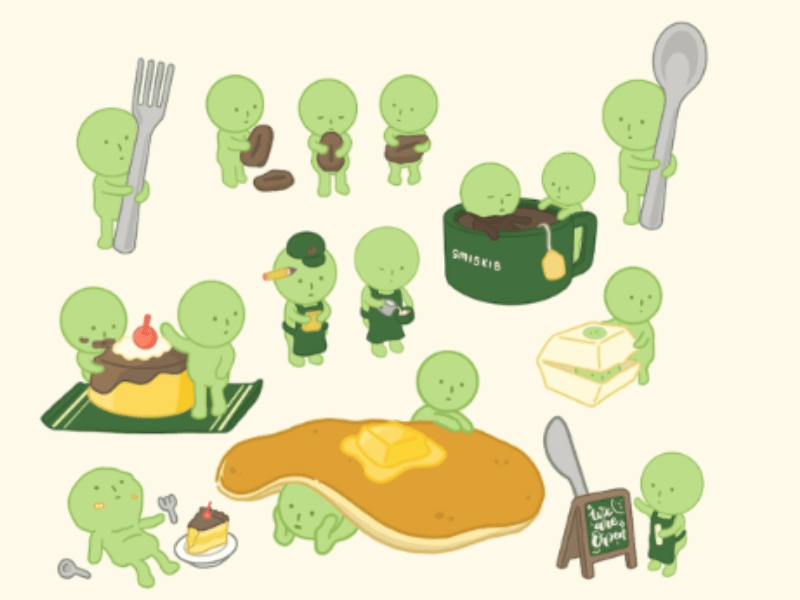
    This week’s focus was pre-production. Specifically, creating two storyboard ideas for a stop motion animation that’s anywhere from thirty seconds to three minutes long. My first idea is: A Day in the Life at the Smiski Café. Smiskis are small figurines usually found hiding in the background of environments, or in the corners of small spaces. There are lots of different smiskis either colored green or blue, and come in various poses in “blind boxes.” This led to the collectible becoming viral and trendy as a room decoration. I chose this as my first linear story idea because I have several different smiskis and a mini café for them, and I knew I could come up with a clear story that has a beginning, middle, and end. The challenge I’m going to run into is moving these props just slightly enough to create fluid stop motion. There are also no aspects of the smiski that can move; each one is fixed in its own pose. I’m leaning towards this idea and still think it could work with maybe some added narration

    The second story idea that’s non-linear is a brief stop motion animation about the tabletop deck-building game, Wingspan. This format follows the book-ending structure, where the story ends exactly where I began. In this case, that will be starting with the game fully set up and ending with the game fully set up. The challenge for this idea is going to be to vary each frame enough. I’m not sure if setting up the game is enough of a story to tell with stop motion. I’m really leaning towards the first day, unless someone can convince me otherwise!

    Stop Motion Animation Test Video


    Creating a stop motion animation was more challenging than I expected. Moving pieces in varying degrees to create fluid movement was tough. I also realized afterward that the camera and tripod aren’t fully level, as the cafe is slightly crooked.

    When I capture all the still images for the full thirty-second animation, I’ll ensure the framing is straight on, have some lights to create consistent lighting, and plan to add a title sequence and some dialogue boxes to fully tell this story.

    Works Cited


    Blazer, Liz. Animated Storytelling: Simple Steps for Creating Animation & Motion Graphics. Peachpit Press, 2020.
  • The Madness Behind Motion

    The Madness Behind Motion

    As exciting as it may be to jump headfirst into animated storytelling, it’s important to slow down and create a plan. The most beautiful, popular, and impactful animations from studios like Pixar and directors like Tim Burton completed preproduction to create masterpieces we all know and love, like The Nightmare Before Christmas.

    Although animation and motion are different disciplines of art, they have a lot in common. Animation is typically referenced with filmmaking and uses character-driven stories. Motion is considered part of graphic design, with a focus on its impact on advertising, broadcasting, etc.

    Animated Storytelling by Liz Blazer offers an insightful step-by-step breakdown of what needs to be done in the preproduction stage before moving on to animating. Liz delves into detail, explaining how to complete concept development, previsualization, and asset building. This first chapter of Animated Storytelling does a great job at defining all three of these concepts and further breaking down the questions you need to answer in each step.

    For example, in concept development, you define what the piece of work you’re creating is about and what it will answer. Blazer outlines specific questions you can write out on a whiteboard or stick notes, some of which are: What must it be? Who is it for? How long must it be? What is the objective of the piece? When is it due?

    The biggest takeaway from the introduction and first chapter of Animated Storytelling is “Slow is smooth. Smooth is fast,” and you can’t achieve this without preproduction.


    GIFS Curation


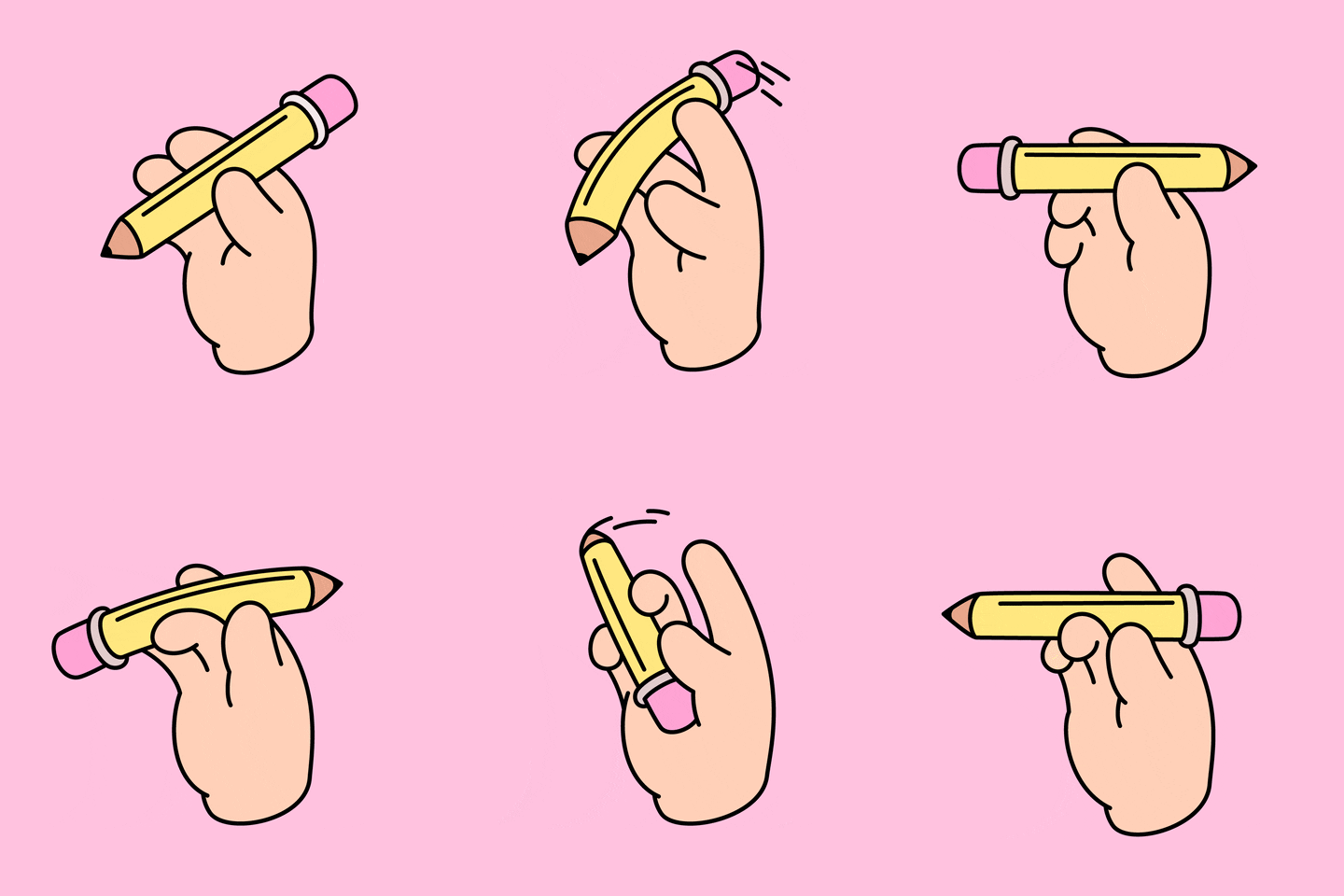
    1) This first GIF stood out to me because of the juxtaposition between the simplicity of the drawing and the endless loop motion. Twirling a pencil is a common frame of reference that everyone has used when they’re deep in thought. It takes me back to when I was writing essays in a classroom!

    GIF created by doodles


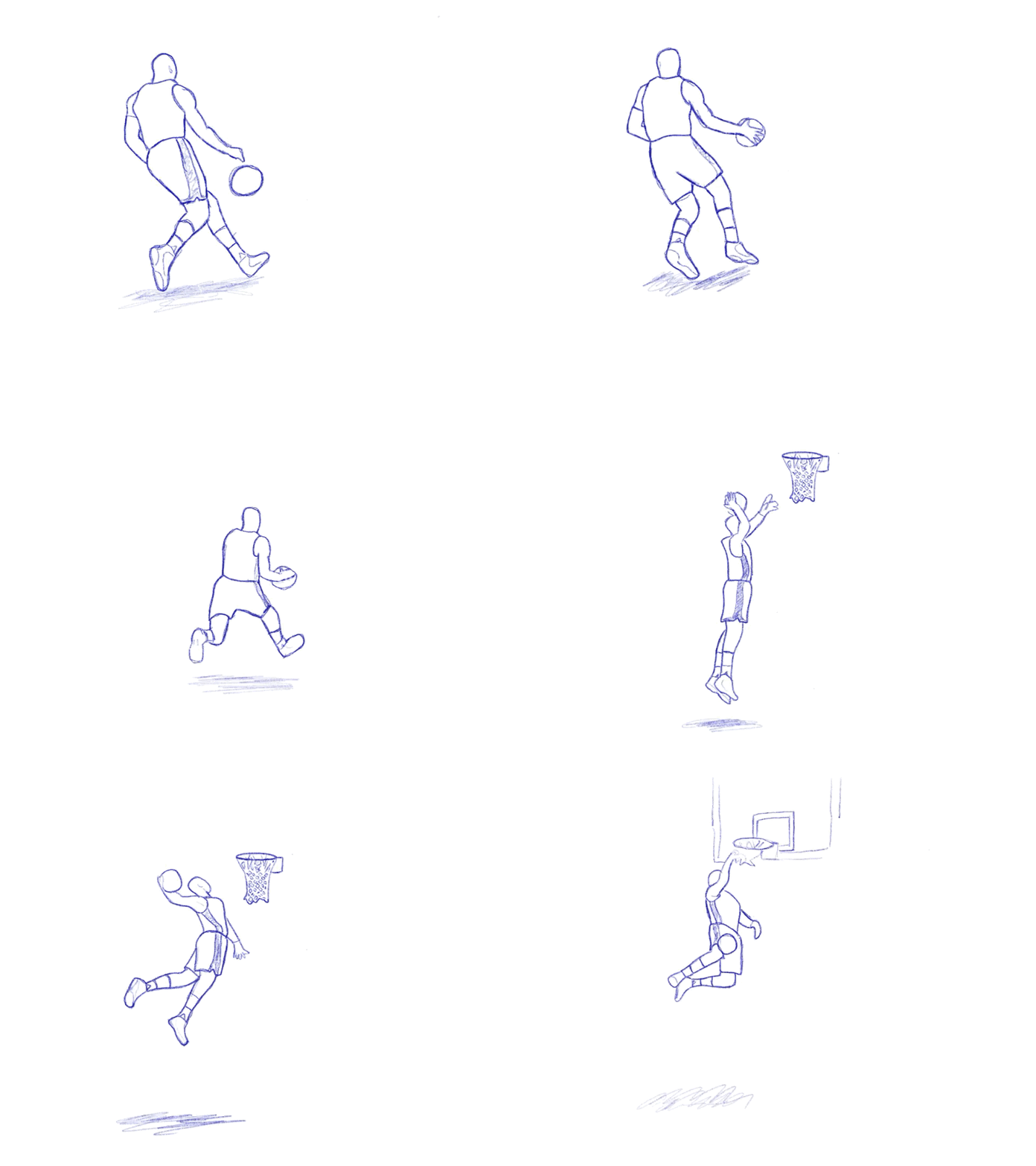
    2) Moving individual drawings to create a sequence using a flipbook is quite challenging. This dunking GIF is impressive and captures the satisfaction and triumph of taking flight to dunk a basketball.

    GIF created by Devin Ross


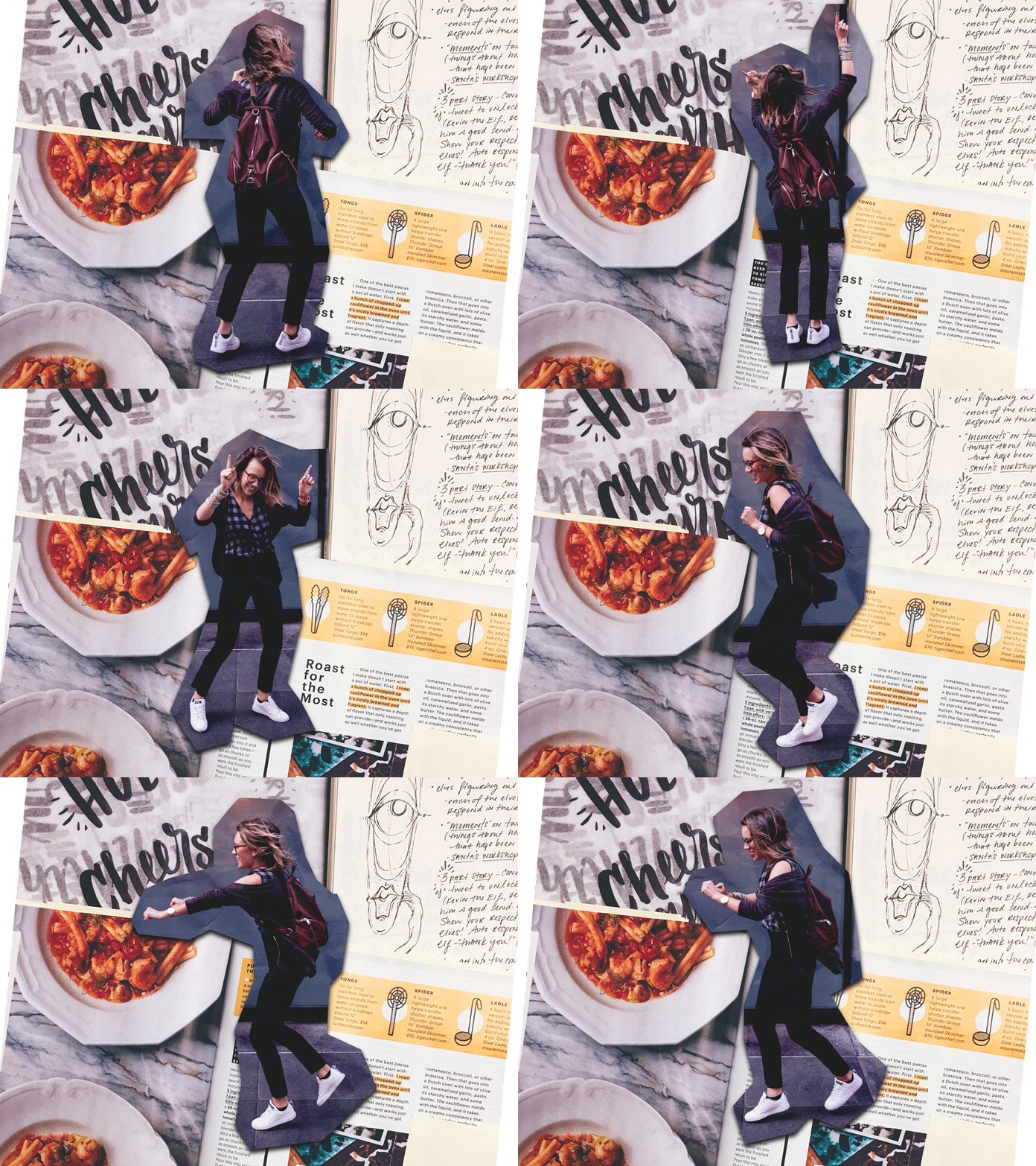
    3) This is a solid example of a stop motion animated GIF. Using a cut-out of a picture and taking lots of pictures where each one moves slightly to create a dance with keyframing makes you feel the celebratory emotion from this GIF.

    GIF created by Nicky Mazur


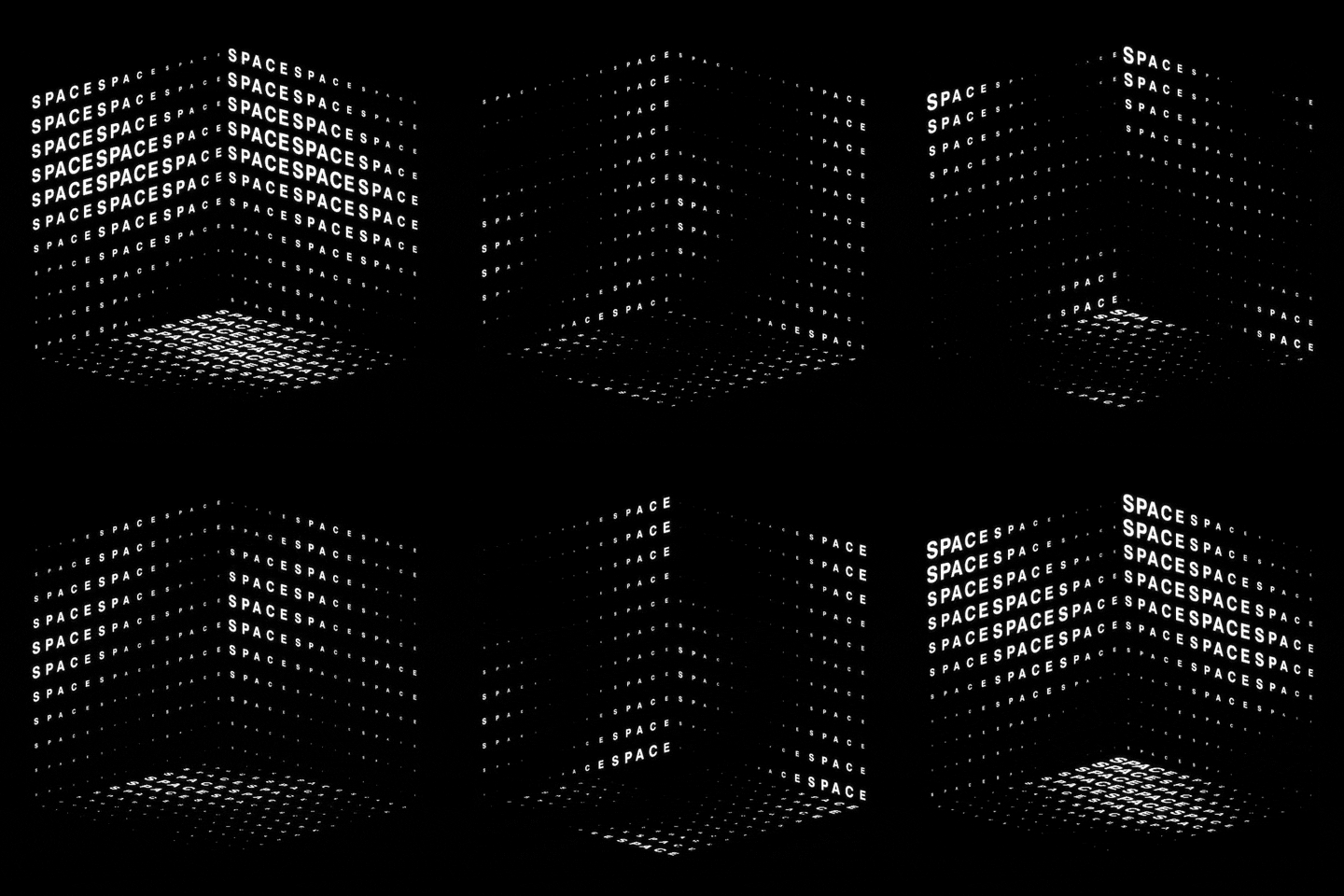
    4) The paradox of this GIF is captivating because the word “space” creates a cube that almost acts as a prison with no space. This is also a great example of tweening!

    GIF created by naufalrel


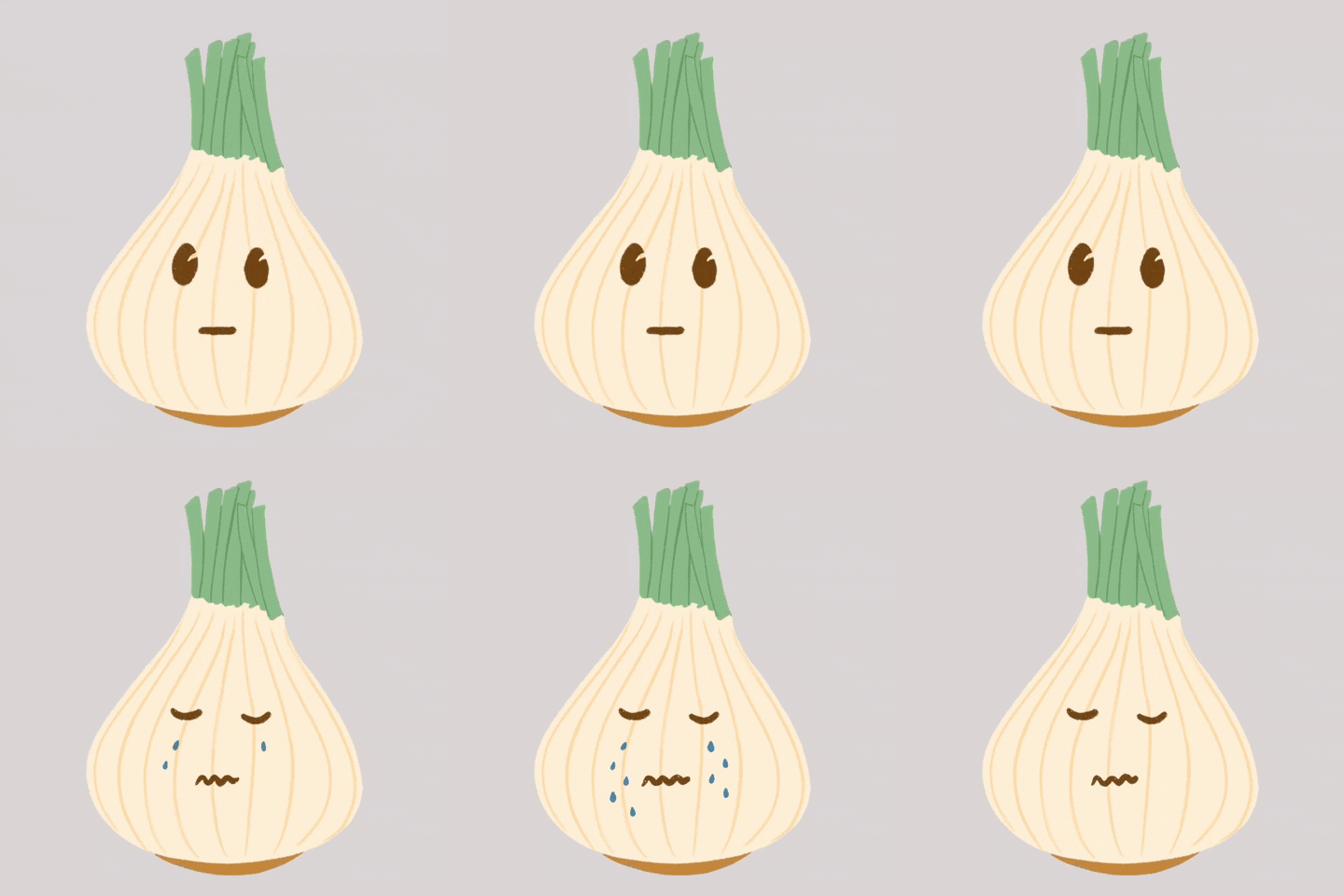
    5) The next GIF of garlic crying is memorable and relatable when you cut an onion and your eyes start to water. This GIF is also a great example of the onion-skinning technique that’s created by a frame-by-frame hand-drawn animation.

    GIF created by GabiSoutoMaior


    GIFs Created by Me


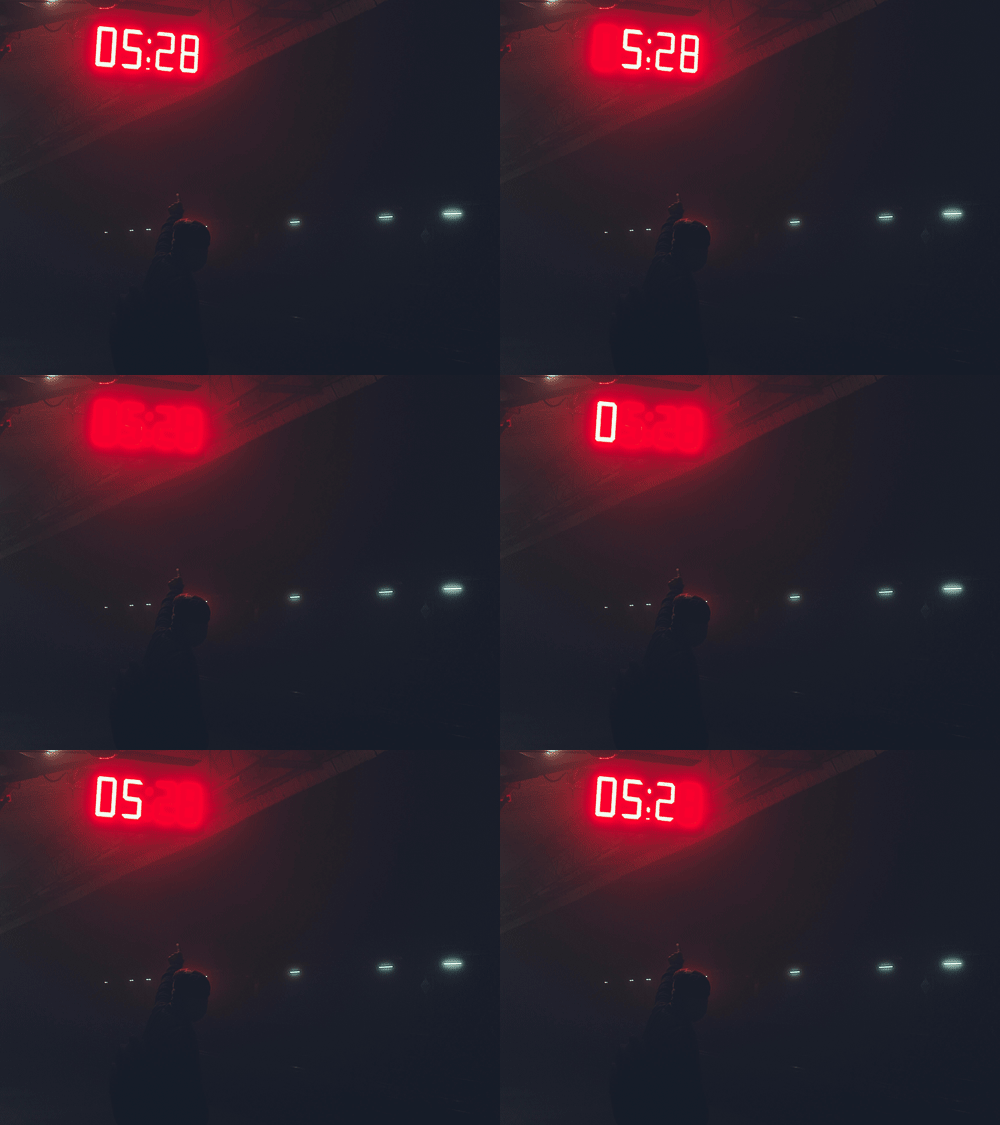
    Flashing Lights

    For this GIF, I focused on creating a “cut-out” style that has a disappearing and reappearing element. I found the image of the neon red digital clock displayed outside in the dusk with a person pointing at the time. It was challenging to create several separate layers to isolate each digit in the time display and then properly sequence them on the video timeline, where the different digits displayed were blocked at various times to create the flickering effect.


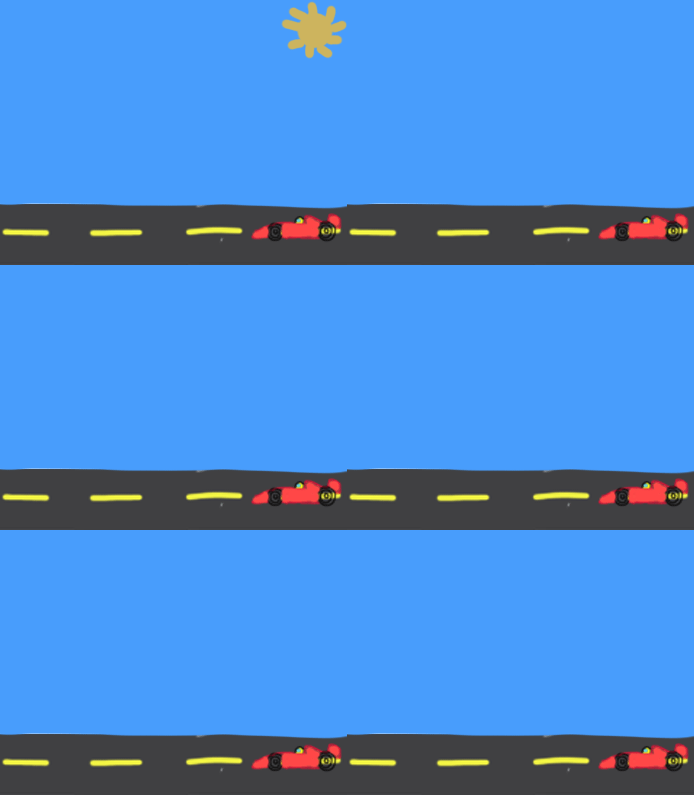
    Don’t Blink or you’ll Miss it

    This second GIF is inspired by my passion for Formula 1 Racing! I drew a simple car driving down a road during the day and used the onion-skinning technique to animate an aspect of the drawing over time. I chose the sun since it was a simple enough drawing to draw over and over again and adjust the spot slightly. I’m interested to see how keyframes and other features within this technique can adjust other aspects of a GIF over time to make it more engaging.

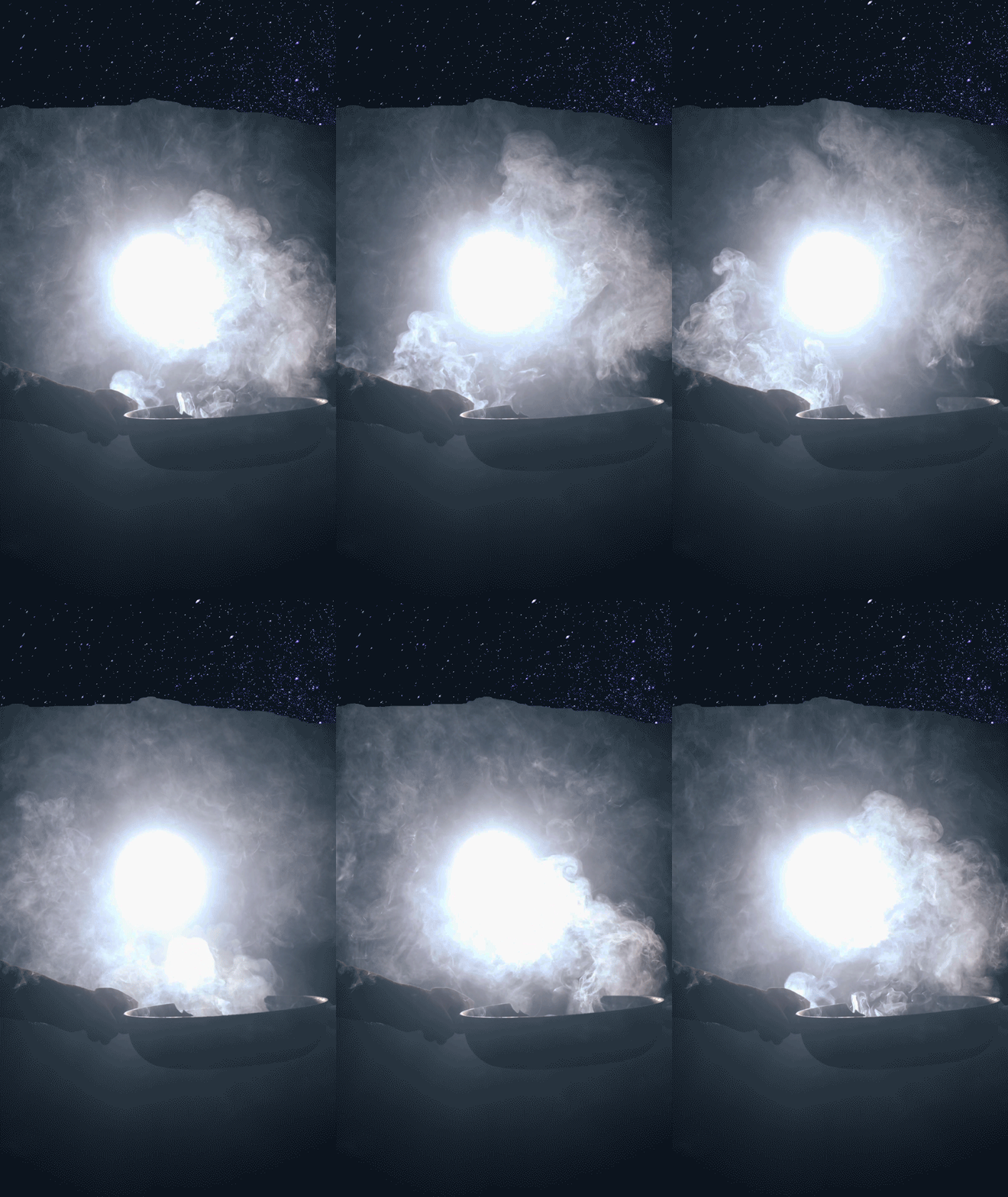
    Rising Steam into Stars

    The last GIF I created was the most challenging, a Cinemagraph. It took me a while to find an image with a singular cohesive movement that was repeatable, so I could isolate that one area with a layer mask to peek through and see the video behind the still image. Creating this GIF solidified for me how powerful layer masks are, how to add videos with still images, and what additional properties, including brightness or feathering, can do to enhance a GIF.


    Works Cited


    Blazer, Liz. Animated Storytelling: Simple Steps for Creating Animation & Motion Graphics. Peachpit Press, 2020.