
Image Source: Generated by Copilot
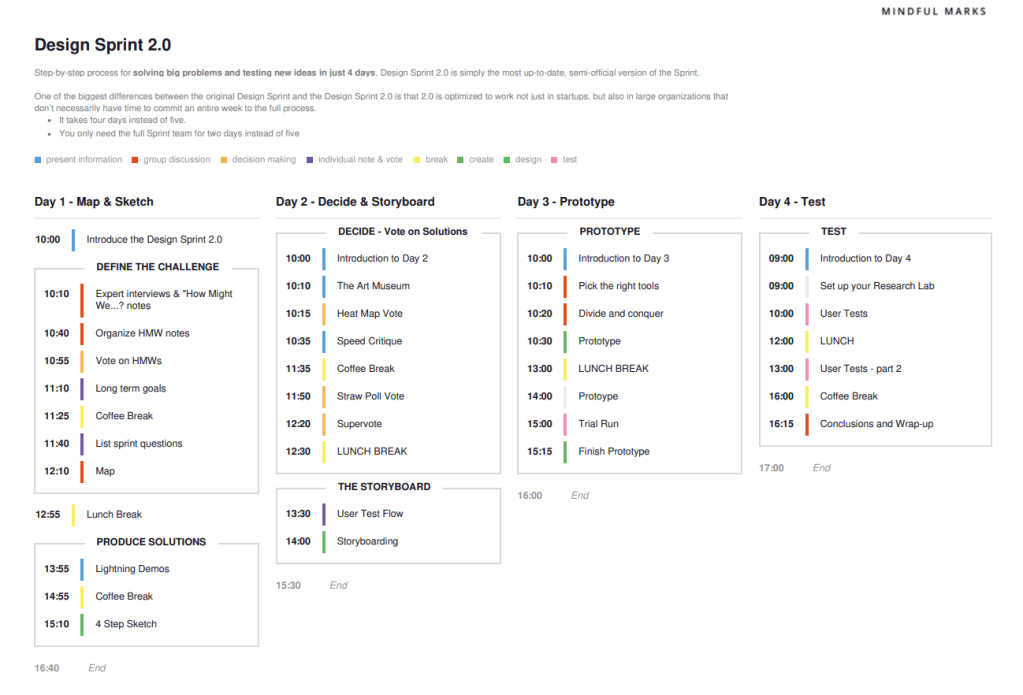
After you’ve fully assessed a situation and have the context you need to create a target, set goals, and flesh out a few potential solutions, it’s time to switch gears to a mindset that’s ready to actively make decisions and dive deeper into the potential of each idea. Let’s explore what this leg of the journey entails when it comes to visiting the art museum, eliminating any assumptions and predispositions, and how you can visualize value before moving into the third phase, Prototyping.
Take Your Time in Each Gallery
When you’ve entered a museum, have you ever only looked at one painting in the gallery and then immediately turned around? Or go through an entire gallery without looking something up or asking someone a question? Probably not. When my team and I kicked off the beginning of Phase 2: Decide + Storyboard, the first thing we did was set aside a moment to have our team member Andrea give us an explanation of each solution sketch displayed within a frame of Miro and all of them were laid out in a horizontal row. Setting up Solution Sketches, like an Art Museum, gave everyone the ability to understand what each person was thinking about for PennyPal (our personal finance app targeting Gen Z consumers) and see how various MVP features coincide with one another.
Creating an Art Museum during a Design Sprint relates to a museum trend I was reading about that’s helping people regain their lost attention. One specific point that I read about and saw happening during our Design Sprint was:
“The other thing that happens in museums and galleries, she says, is that we take notice of the objects and the collections. That act of taking notice is all about being in the present moment.”

Image Source: BBC
I immediately noticed after we started the art gallery activity that eliminating distractions and holding space to sit with ideas helped us turn abstract ideas into connected concepts.
Eliminating Assumptions & Predispositions
Everyone’s experience using an app is different. Take Instagram for example. I might open the app, go to my message feature, send a DM to my friend, and then click the post button to publish a piece of content. Chloe, on the other hand, might open Instagram, go to the explore feed, watch a few reels, leave a comment on one, then send it to her friend as a message.
When it came to choosing a User Flow for PennyPal, I was the decider. I tried my best to think about the experience holistically. Playing this role in the exercise reminded me a lot about the role I play in my current job every day. I work as an Associate Director of Digital Engagement at Quinnipiac University, and one of my responsibilities is managing a social media account with several profiles. Every day, I am a decider in choosing the content I am going to publish, using a pool of resources I have access to (campus updates, Alumni spotlights, Alumni events, etc.).

Image Source: MakeUseOf
The parallels between my role at work and my role as the Decider during the super voting for User Flows is captured perfectly in the book Sprint: How to Solve Big Problems and Test New Ideas in Just Five Days.
“It’s important to note that this decision-making process isn’t perfect. Sometimes, Deciders screw up. Sometimes good ideas don’t get selected (at least, not in the first sprint). But the sticky decision – if not perfect – is pretty good and very speedy. That speed helps with the sprint’s larger goal: getting real world data…”
As the person in charge of several social media profiles this is how I feel. The ability to be decisive to test and learn to collect real-world data to understand signals from our audience is crucial to our growth and success. Being in this role at work is like running a Design Sprint. It is an iterative process that loops back and forth.
Visualizing Value
The last part of this phase of the Design Sprint was Storyboarding. After our group selected a User Flow, it was time to sketch out what these micro interactions would look like within our app.
For me, Storyboarding illustrated how our (hopefully millions of) Gen Z users can navigate through PennyPal in a way that makes it crystal clear if they will adopt using some of our main features like Budgeting, Goal Tracking, and Investing and if Gamification features with rewards will make them want to keep coming back for more.
Storyboarding isn’t something only used in Design Thinking. Tons of the best businesses in all types of fields use Storyboarding to foster collective creativity. Take Pixar, for example.
“Each of their teams typically consists of a director, writer, artists, and storyboard people. The development department’s goal is to find individuals who will work effectively together. During this incubation stage, you can’t judge teams by the material they’re producing because it’s so rough—there are many problems and open questions. But you can assess whether the teams’ social dynamics are healthy and whether the teams are solving problems and making progress.”

Image Source: HBR
My one takeaway from this statement about Pixar and after I went through Storyboarding is this process creates progress and pushes everyone and everything forward.
I’m excited to see how these ideas will manifest into real-world tangible concepts that we can test as prototypes.










 Kyle Adams POV