
Image Source: Generated by CoPilot
What if your Oura ring could predict your emotions before you even felt them? Or, what if you had a tattoo that was your biometric access to take public transit? Design Fiction is a concept that enables creators to make products that are future-forward. This is an opportunity to tap into your imagination, whether it’s envisioning a utopia or dystopia. Using design fiction, combined with visual storytelling, you create a catalyst for social and technological evolution that challenges the present world as we know it. Let’s first look at how design fiction is a proponent of change.
Design Fiction as a Catalyst for Change
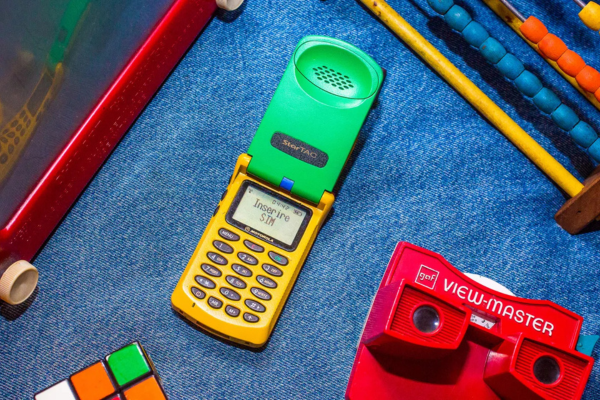
Image Source: CNET
Persuasion is most powerful when it’s grounded in a narrative context. You can have the most stunning visual, but beauty without a compelling narrative doesn’t convince policymakers or anyone in a position of power to execute real change. Richard Buday, the author of the article “The Reality of Design Fiction: How Storytelling Can Save The World,” references a proverb that supports the previous statement perfectly. “What is truer than the truth? A Story.” Buday goes on to offer several pop culture examples that capture the essence of how films, stories, and novels that employed this philosophy moved the needle forward. My favorite example is how Star Trek showed us flip phones in 1964, and three decades later, Motorola sold its first flip phone, the StarTac. After understanding design fiction and how it’s a catalyst when it’s rooted in storytelling to persuade people, you can use a framework to create story-driven design.
Story-Driven Design: A Framework for Visual Coherence
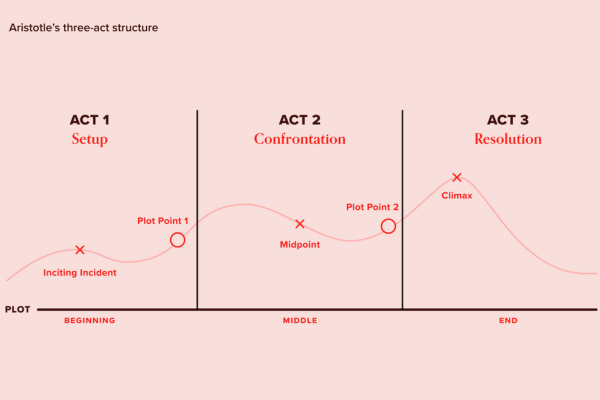
Image Source: Smashing Magazine
More often than not, people think writers are the only creators who need to rely on a narrative to connect with an audience. This is false. Designers use storytelling to create meaningful user experiences that are memorable. Award-winning designer Chiara Aliotta has trademarked a five-step framework to enable designers to create visual coherence.
1. Understand Your Protagonist And The Purpose Of The Product
2. Define the Structure of Your Narrative
3. The Beginning
4. The Middle
5. The End
The second step of this framework supports the idea that combining Aristotle’s three-act concept with the “StoryBrand Structure” by Donald Miller, a philosophy that stories must be a chain of cause-and-effect moments, creates the most clear sense of continuity throughout any narrative.
One of the best examples I can think of to reference that supports this is the first season of the Netflix Original, “Stranger Things.” This is a sci-fi series based on a series of supernatural events that happen in a small town in Indiana, following a group of young friends who discover one mystery after another involving the government and supernatural forces.
The first season of Stranger Things is a perfect example of combining Aristotle’s three-act concept with the StoryBrand Structure because there are three clear acts with a cause-and-effect narrative.
- Act I: One of the main characters, Will, disappears and initiates the first mystery (Setup)
- Act II: The group of children meets Eleven, a child with psychic abilities who is a government experiment, and eventually discovers the “Upside Down.” (Confrontation)
- Act III: The group of children confronts the Demogorgon (monster) and saves their friend Will, who went missing (Resolution).
Despite the fact that this is fiction, you can still leverage the hero’s journey to anticipate change and design future experiences that are a reality.
The Hero’s Journey as a Tool for Designing a New Reality
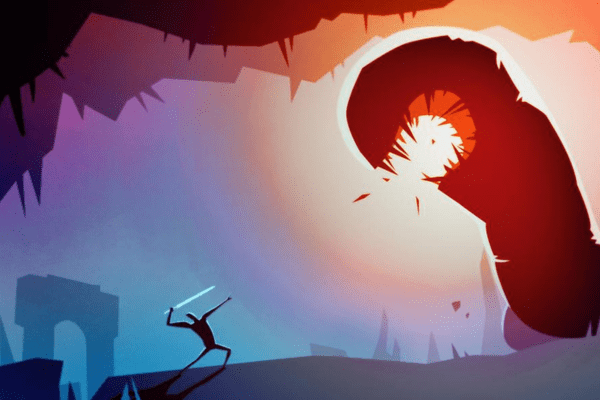
Image Source: TedEd
The hero’s journey is one of the most popular concepts that is not only a storytelling tactic but also used in design thinking and trend predicting. It’s a great tool for innovation in the design process because it grounds very abstract and complicated ideas into simpler stories that are relatable and puts the user in the spotlight.
Leah Zaid, an award-winning futurist, authored an article, How to Use the Hero’s Journey as a Design-Thinking + Foresight Tool, that details a simplified version of how you can conceptualize the hero’s journey as a designer to better understand your customers and target audience.
Learning about patterns in action to understand what a narrative arc, hero’s journey, and how to storyboard taught me how design fiction can be a catalyst for change. Once I knew more about the why behind this, I was able to shift my attention to story-driven design, specifically how to use it to turn speculation into a narration that’s compelling and emotionally relatable. Lastly, I reframed the hero’s journey and learned about its relationship with change and how to tap into it for user journeys to design future experiences that can become reality.
All of this leads me to believe that in our world of uncertainty, maybe the most powerful design tool we have is knowing how to tell a good story.
 Kyle Adams POV
Leave a comment