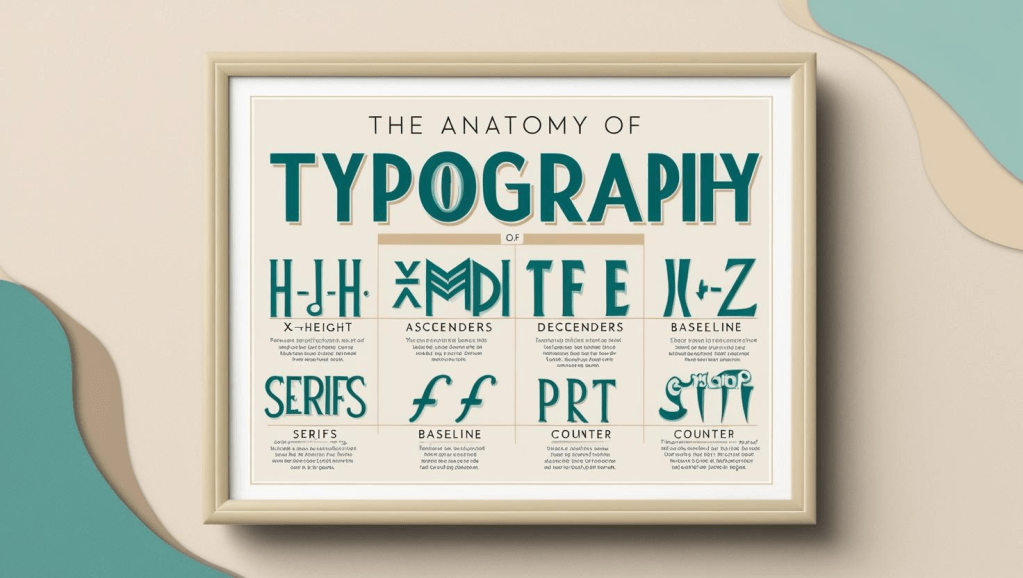
Image Source: Canva Dream Labs AI Generator
Every day, the average person reads about a dozen different typefaces. Whether it’s a billboard for a new business that opened in your neighborhood, the recipe for a meal in a cookbook, or a television broadcast of your baseball team. Typography is one of the most powerful tools to convey emotion. Although it’s something most people seldomly think about in terms of understanding its core components and how to use it to convey specific moods, it is one of the most powerful tools a designer can have in their arsenal.
After thinking about this week’s readings, videos, and assignments, I’m going to delve into the anatomy of type, explaining how several core components make up a typeface and ultimately the mood it conveys.
Every Major Cog in the Machine
After reading the first section of chapter 2: building blocks in the book, “Graphic Design for Everyone” it started to click for me. Just like the technology we have that uses lots of parts to make a device work, Typography has a nuanced anatomy with various components that make up its structure to create different typefaces. I’m going to teach you about three different components that make up the structure of a Typeface for you to better understand how designers can manipulate these things to create different typefaces.
Ascenders
The first component I want to examine is the ascender. An ascender is the part of the lowercase letter that extends above the x-height (the height of a font’s lowercase x). If a designer selects a font with high ascenders, it’s usually because they want a letter to be easily distinguishable. You’ll see this often with book titles, such as the example pictured below which would be used as a font for a fantasy book.
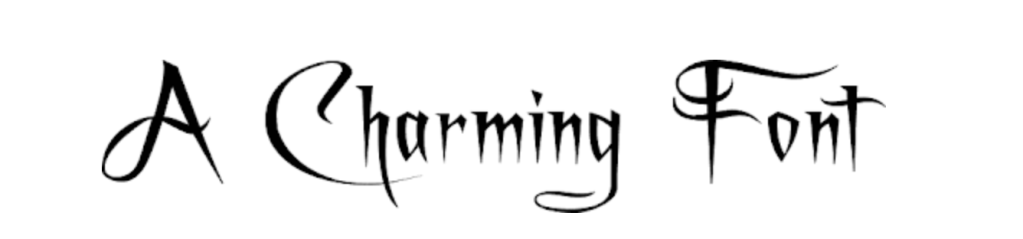
Image Source: Creatype Studio
Bowls
The next component we’re going to look at is a bowl. This is the curved stroke that creates an enclosed space. This is a significant element of type design because the size, curvature, and proportions of the bowl can vary significantly depending on what typeface you’re using. A great juxtaposition to look at to better understand the bowl, is comparing the letters R and B and this article titled “Typography design 101: a guide to rules and terms” explains it perfectly.
“The letters B, P and R are sister shapes, one being derived from the other. However, that doesn’t mean they have the same proportions. The bowl of the R needs to be slightly thinner so that when we connect the leg to it, it won’t become super thick. While the upper bowl of the B needs to be smaller than the bottom one, so that the letter appears more stable.”
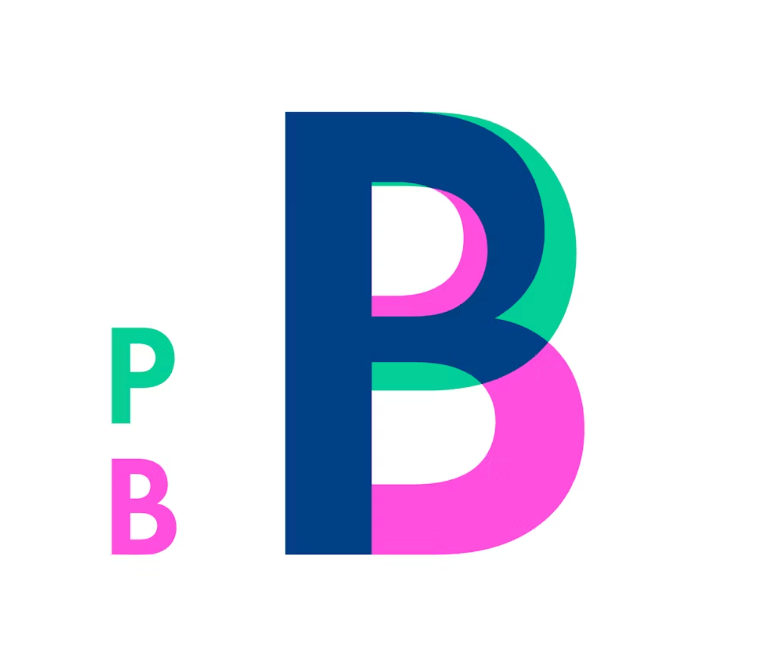
Image Source: 99Designs
Serifs
One of the most prevalent components in all typefaces is the presence or absence of a serif, a small, decorative extension at the ends of some strokes. This component defines whether a typeface is a serif type, or sans serif type. Serif types have this decorative extension and sans serif types do not. When you compare the two next to each other you can immediately tell a different mood is set. Serif typefaces typically look authoritative, professional and serious. Sans serif typefaces are usually quirky, whimsical and fun. Choosing these your typeface wisely based on your brand’s essence and expression can make or break your brand in terms of how it resonates with your intended target audience.
Although typography is the unsung hero when it comes to what the average person thinks of when they hear the word branding, understanding it and mastering it is one of the most useful skills a designer can build.
 Kyle Adams POV
Leave a comment